
Koh Samet Luggage Guide for a Smooth Pier Transfer
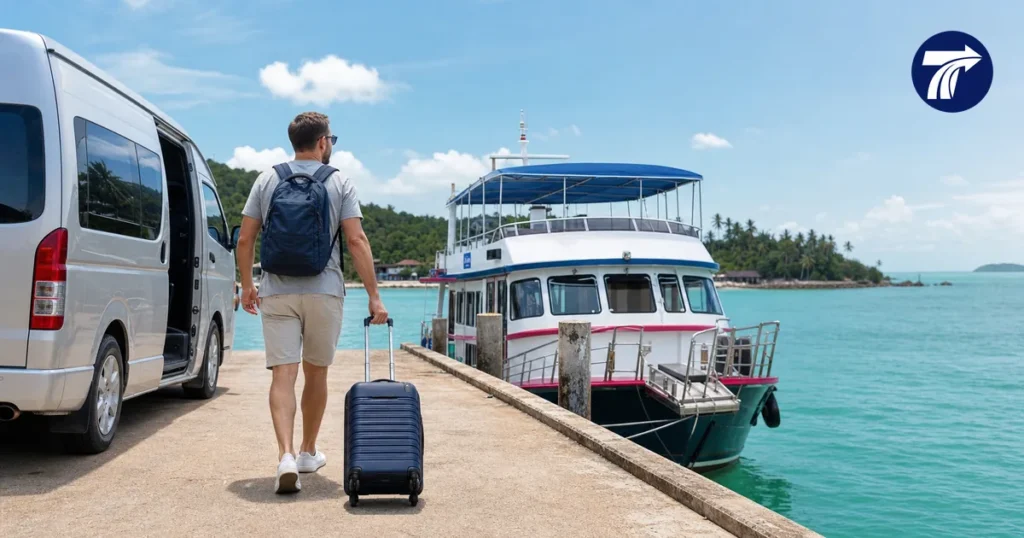
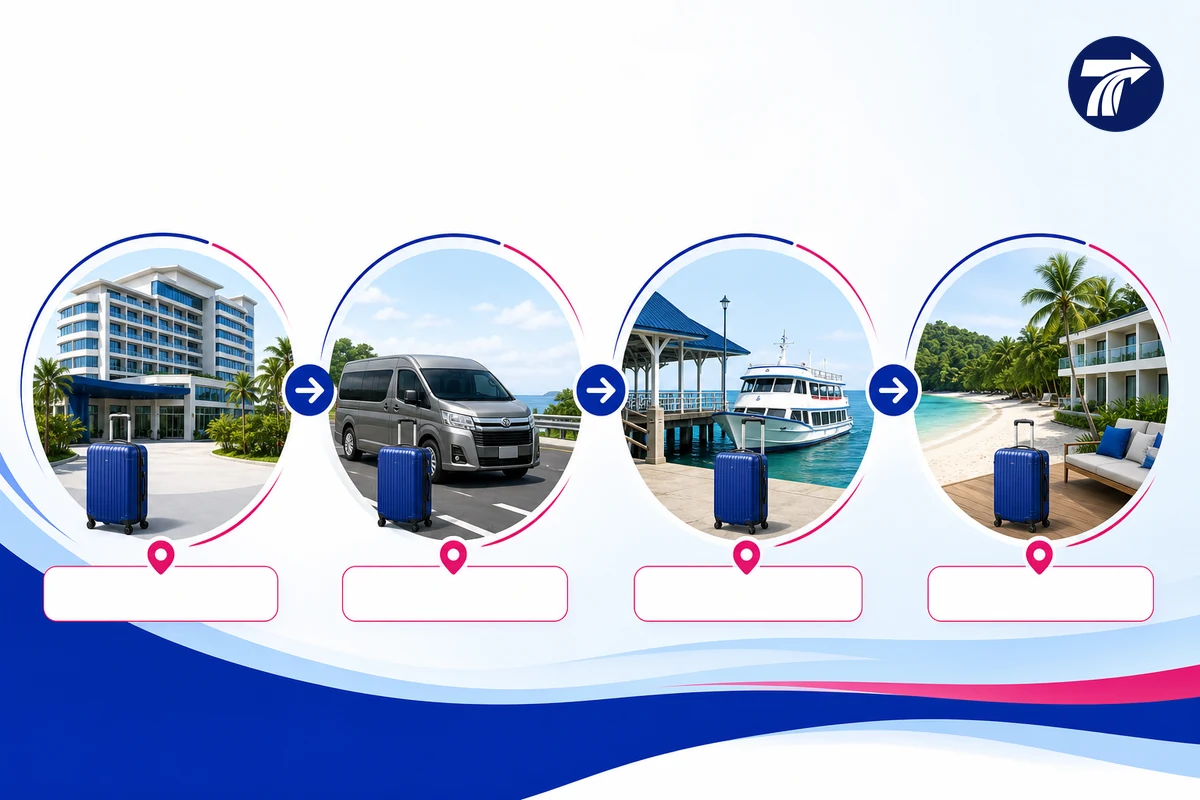
A trip from Pattaya to Koh Samet involves more than one vehicle. Your bags travel by road to Ban Phe, move through a pier, cross by boat and then continue to your hotel on the island. Each stage is straightforward when your luggage is easy to identify, lift and keep dry. The problems usually begin when travellers pack only for the taxi and forget about the handover between the car, pier and boat.
This Koh Samet luggage guide explains how to prepare for that chain of movement. It does not set rules for a particular ferry operator, because baggage limits and handling procedures can change. Always check your selected boat operator and hotel before travel, especially if you have oversized sports equipment, a wheelchair, a pushchair or several large cases.
For the mainland road section, see our Pattaya to Ban Phe Pier and Koh Samet transfer guide.
The short answer: pack for the pier, not only the car
For most travellers, the most practical setup is:
- one manageable suitcase or travel bag per person;
- one small day bag containing documents, valuables and anything needed during the crossing;
- a waterproof cover or inner dry bag for electronics and medication;
- a visible luggage tag with your name and contact method;
- an accurate luggage count shared with the transfer provider before pickup.
The best bag is not necessarily the smallest. It is the one you can control while walking over an uneven surface, waiting near other passengers and boarding under the instructions of pier staff.
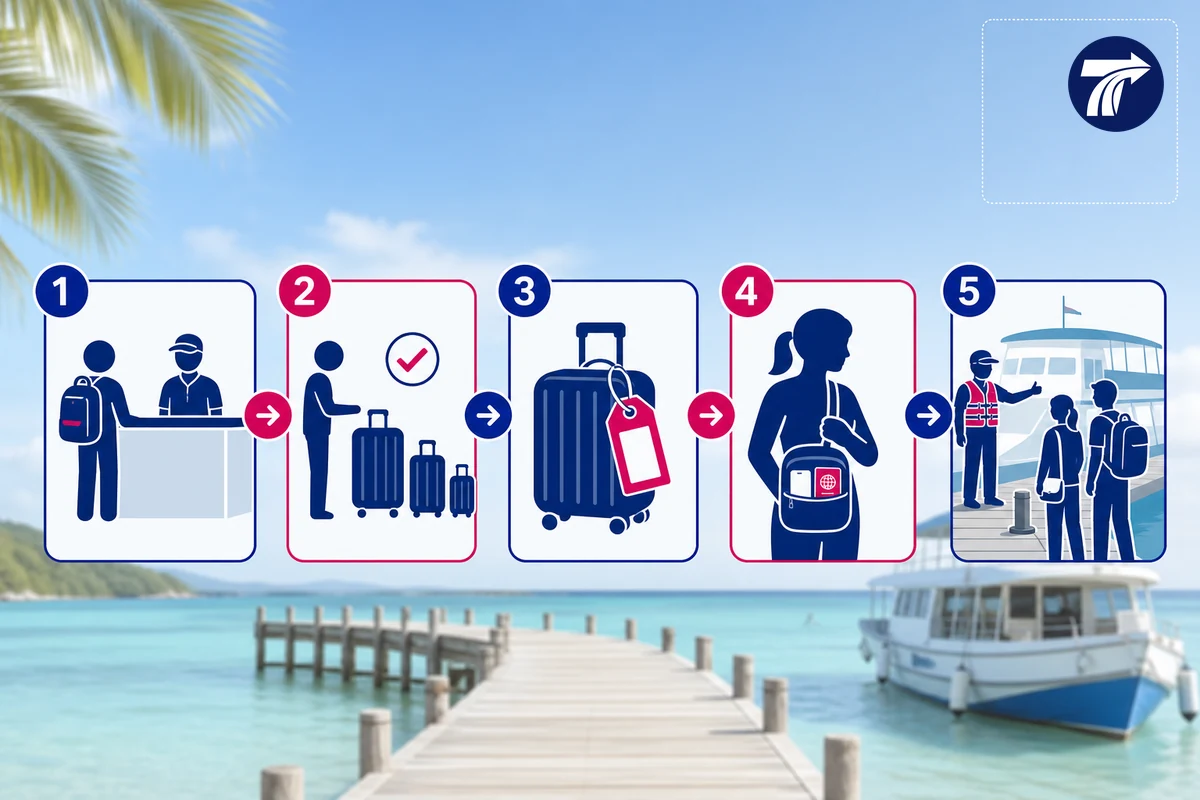
Understand the four-stage luggage journey
Thinking about the journey in stages makes packing decisions much easier.
1. Pattaya hotel to the transfer vehicle
At pickup, your driver needs enough information to arrive with an appropriate vehicle. “Two passengers” is incomplete if the booking also includes two golf travel cases, four full-size suitcases and a folded pushchair. Send the number and approximate size of every major item when you book.
Do not rely only on the advertised passenger-seat number. A vehicle may have seats for a group but insufficient usable luggage space once all seats are occupied. TOP PATTAYA TAXI lists sedan, SUV and van options, but the correct choice depends on the real combination of people and bags. A quick luggage photo is often more useful than a long description.
Keep passports, wallets, phones, boat confirmations and hotel details with you. Do not place them in a case that will be buried under other luggage.
2. Vehicle to Ban Phe Pier
At Ban Phe, the road transfer and island transport become separate parts of the journey. Confirm the exact pier and boat operator rather than asking only for “the Koh Samet ferry.” Different services may use different counters, boarding points or procedures.
Before unloading, count your large bags and smaller loose items. Check the footwell and seat pockets for chargers, sunglasses and travel documents. If the transfer ends at the pier, this is the moment to confirm that you have everything before the vehicle leaves.
3. Pier to boat
The boarding surface may not feel like an airport terminal. Expect to handle your luggage over short stretches, follow staff directions and keep loose items secure. Boat crews may decide where larger bags are placed for balance and safety. Keep fragile items protected inside the case and never assume that a large bag will remain beside your seat.
If a member of your group cannot lift or control their luggage, arrange assistance in advance with the operator. Do not wait until boarding to discover that help is unavailable.
4. Island arrival to the hotel
Koh Samet has several beach areas and not every hotel is beside the main arrival point. Your hotel may provide its own boat, arrange local transport or ask you to arrive at a particular pier. The Tourism Authority of Thailand lists accommodation and beaches around the island, including Hat Sai Kaew, Ao Phai, Ao Wong Duean and Ao Phrao, so “Koh Samet hotel” is not a precise destination.
Send your hotel the number and size of your bags. Ask:
- Which island pier should we use?
- Is onward transport included or separate?
- How far must we carry bags from the drop-off point?
- Can the property assist with large luggage?
- Does a private boat have a different luggage policy?
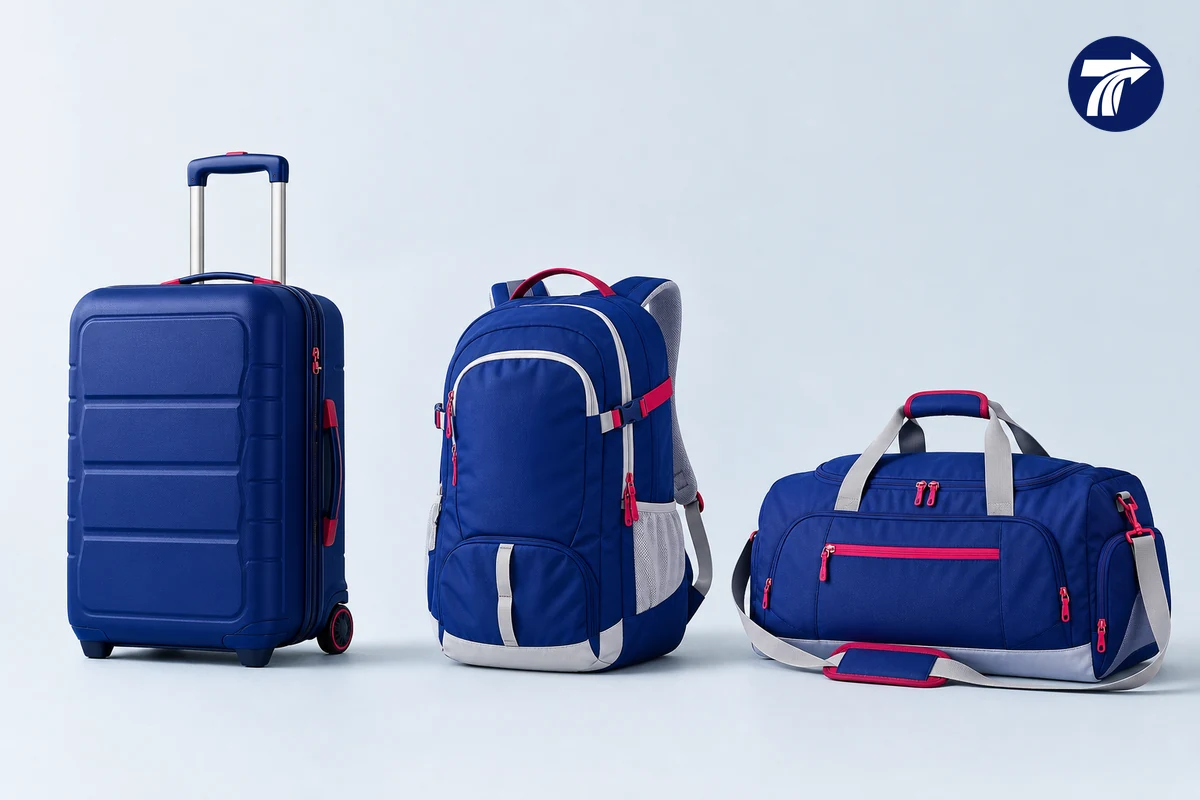
Suitcase, backpack or duffel: which works best?
Each style has advantages.
Wheeled suitcase
A wheeled suitcase protects clothing and is convenient on smooth hotel floors. Choose one with strong handles because you may need to lift it rather than roll it. Four small spinner wheels can be less useful than two robust wheels on rough surfaces.
Travel backpack
A backpack leaves both hands free and is often easier during a short pier transfer. It becomes uncomfortable if overloaded, and it may offer less protection for fragile items. Use packing cubes and a waterproof liner so the contents stay organised.
Soft duffel
A duffel fits into irregular luggage spaces more easily than a rigid case. It is useful for clothing but can be awkward when heavy. Choose one with reinforced handles and avoid leaving breakable objects near the outer fabric.
Large hard case
Hard cases offer protection but require more space and are difficult to lift when overpacked. If you bring one, make sure a traveller in your group can handle it without depending on an unknown porter service.
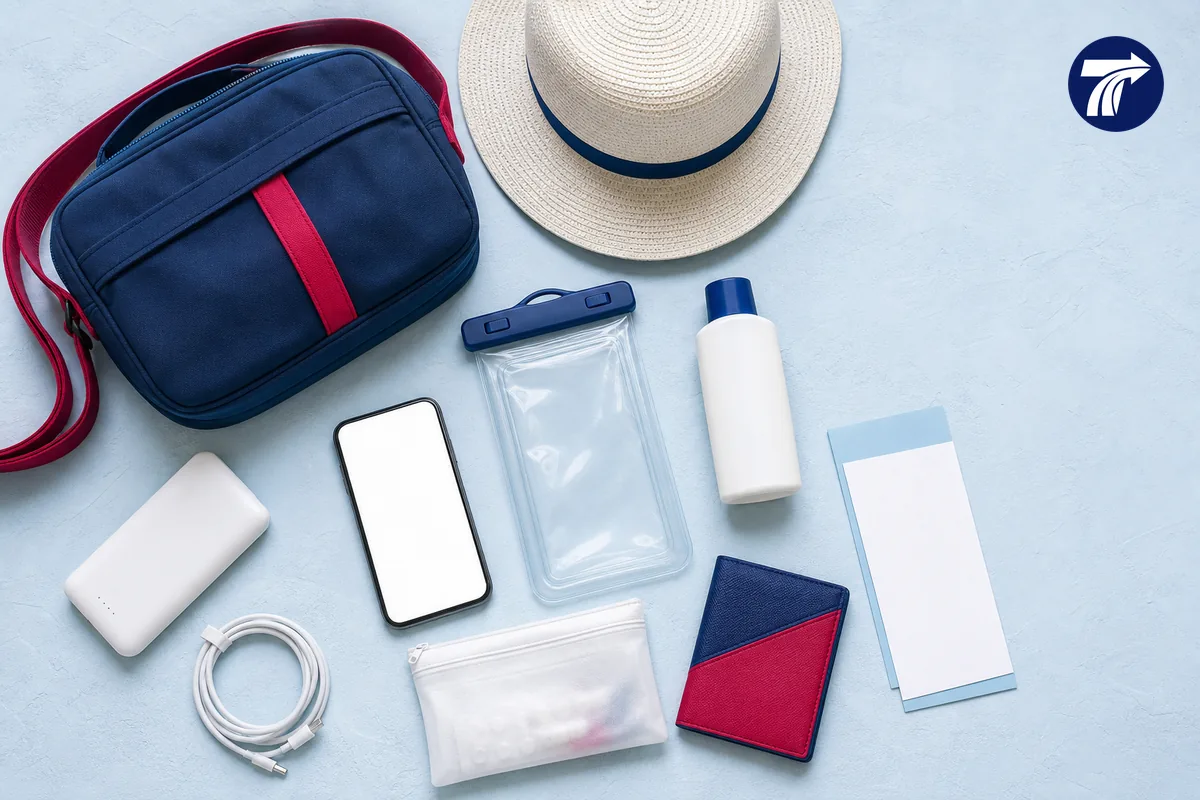
Separate your “crossing bag”
Create one small bag that stays with you from Pattaya to the hotel. It should contain:
- passports and travel documents;
- phone, power bank and charging cable;
- booking messages and hotel contact details;
- essential medication;
- sunglasses, hat and sunscreen;
- a light rain layer;
- tissues and hand sanitiser;
- drinking water where permitted;
- cash in small denominations;
- a dry pouch for electronics.
This prevents you from opening a large suitcase at the pier. It also protects essential items if your main bag is stored away from your seat during the crossing.
Keep bags dry without overpacking
Sea spray, rain and wet surfaces are normal possibilities on an island journey. You do not need specialist expedition luggage, but sensible protection helps.
Place medication, electronics and documents inside sealable waterproof pouches. Use a fitted rain cover for a backpack and close all external pockets. A bright cover or strap also makes a dark suitcase easier to recognise among other bags.
Avoid tying many small plastic bags to the outside of your case. Loose items are easy to forget and difficult to count. Consolidate shopping and snacks into one secure carry bag.
How much luggage should you report to the taxi company?
Report everything that occupies meaningful space:
- full-size checked suitcases;
- cabin cases;
- golf bags and travel covers;
- pushchairs;
- wheelchairs or mobility aids;
- diving or fishing equipment;
- large coolers;
- boxed items;
- musical instruments.
Include dimensions for unusual items and say whether they fold. If possible, send one photo showing the complete luggage group. TOP PATTAYA TAXI can then confirm a suitable option rather than making assumptions from passenger numbers alone.
The website’s Services & Rates page lists the standard vehicle categories and current route fare. The published seat figures are a general guide, not a promise that every passenger-and-bag combination will fit.
Special items need separate confirmation
Golf bags
A golf travel case is much longer than a normal suitcase and can change the vehicle requirement even for a small group. State the number of golf bags, whether they are soft or hard cases and how many normal suitcases accompany them. See our vehicle guide for Pattaya golf bags before selecting a sedan, SUV or van.
Pushchairs and child equipment
Tell both the road-transfer provider and boat operator what you will bring. Confirm whether the pushchair folds and provide its folded size. Child restraints in the road vehicle are request-only: send the child’s age and approximate weight, and obtain written confirmation of availability, suitability and any charge. Do not assume a restraint is free or guaranteed.
Wheelchairs and mobility aids
Explain whether the wheelchair folds, its weight and whether the passenger can transfer independently. Accessibility can differ between the vehicle, pier, boat and island transport, so each provider must confirm its own stage.
Diving equipment and batteries
Ask the boat operator about cylinders and specialist equipment. Keep batteries and electronic devices packed according to the relevant transport provider’s safety rules. Never conceal equipment that requires special handling.
A smooth Ban Phe handover
Before the travel day, save the pier name, boat operator and hotel contact in your phone. On arrival:
- confirm the ticket counter before moving all bags;
- keep the group together while one person checks in;
- count large pieces before and after unloading;
- attach contact tags but conceal your home address;
- follow staff instructions about where large luggage must go;
- keep valuables and medication in your personal bag;
- photograph baggage receipts or tags if the operator issues them.
Allow a sensible buffer between road arrival and your chosen boat. Traffic, pier queues and weather can affect the connection. TOP PATTAYA TAXI should not be presented as guaranteeing a ferry departure unless that commitment is explicitly confirmed in your booking.
Plan the return before leaving Pattaya
The return journey works best when you treat the island boat and mainland car as two coordinated reservations. Send the driver:
- travel date;
- expected mainland arrival point;
- boat operator;
- planned departure from the island;
- lead passenger’s phone or WhatsApp number;
- number of passengers;
- updated luggage count.
Do not use the island departure time as the mainland pickup time. The driver needs the expected time you will be ready at Ban Phe after the crossing. Because boats and weather can change, keep the driver informed if your plan moves.
Read our Koh Samet hotel areas and return pickup guide for a clearer handover plan.
Luggage checklist for the night before travel
- Confirm the exact Ban Phe pier and boat operator.
- Confirm the island arrival point with your hotel.
- Count all large and small bags.
- Send unusual-item details to the transfer provider.
- Label each main bag.
- Put valuables and medication in a personal bag.
- Waterproof documents and electronics.
- Remove loose items from external pockets.
- Save hotel, boat and driver contact details offline.
- Reconfirm return pickup details if already booked.
Frequently asked questions
Can I take a large suitcase to Koh Samet?
Many visitors travel with suitcases, but acceptance, charges and handling are controlled by the selected boat operator. Confirm current rules with that operator and ask your hotel how luggage continues from the island pier.
Will the taxi driver carry my bags onto the boat?
Do not assume this. A road transfer to Ban Phe normally has a defined drop-off point, while pier and boat handling are controlled by other parties. Ask what assistance is included when you book.
Is the ferry ticket included in the Pattaya transfer fare?
This must be confirmed for the specific booking. The public road-transfer price should not be interpreted as including boat tickets or island services unless TOP PATTAYA TAXI states that in writing.
Which vehicle fits my luggage?
It depends on passengers, suitcase sizes and unusual equipment. Send the complete count and a photo. The team can confirm the most suitable available vehicle instead of relying on a generic capacity estimate.
What if my boat is delayed on the return?
Contact the driver as soon as you receive an update. Waiting and rescheduling terms should be confirmed before travel because they can depend on the booking circumstances.
Book the mainland transfer with the luggage details included
The easiest time to solve a luggage problem is before the vehicle arrives. When requesting a Pattaya–Ban Phe transfer, send TOP PATTAYA TAXI your date, pickup location, passenger count, exact pier and a complete bag list. You can review the current Pattaya transfer fares and then contact TOP PATTAYA TAXI for confirmation.