An Erawan Falls trip from Pattaya works best as a confirmation-led overnight plan, not a race between a long road journey and a fixed park checklist. Staying in Kanchanaburi creates room to verify current conditions, reach the correct entrance and change the nature plan if access, weather or trail rules are different on the day.
This guide separates private road transport from the national park, hotel and meal arrangements that travellers must check themselves. It does not state that Erawan is open now, promise entry or swimming, or include admission, accommodation, food, guiding or unspecified waiting in a taxi fare.
Why Erawan Falls Works Better as an Overnight Trip From Pattaya
The main advantage of an overnight is flexibility. The first day can be used for the confirmed Pattaya-to-Kanchanaburi transfer and hotel arrival, leaving the park visit for a second morning after an official status check. That is more resilient than building a same-day return around a precise arrival time that traffic, weather and road access may change.
An overnight also lets the group choose a base that matches the agreed vehicle route. A town hotel, an Erawan-side stay and a remote riverside property can create very different Day 2 movements. The property name alone does not establish its road access, and the published Kanchanaburi fare does not prove coverage of every park-area endpoint.
Use the Pattaya–Kanchanaburi private-transfer page for the route fare and vehicle boundaries. Keep this page focused on Erawan-specific preparation and current park verification.
A Flexible Two-Day Structure at a Glance
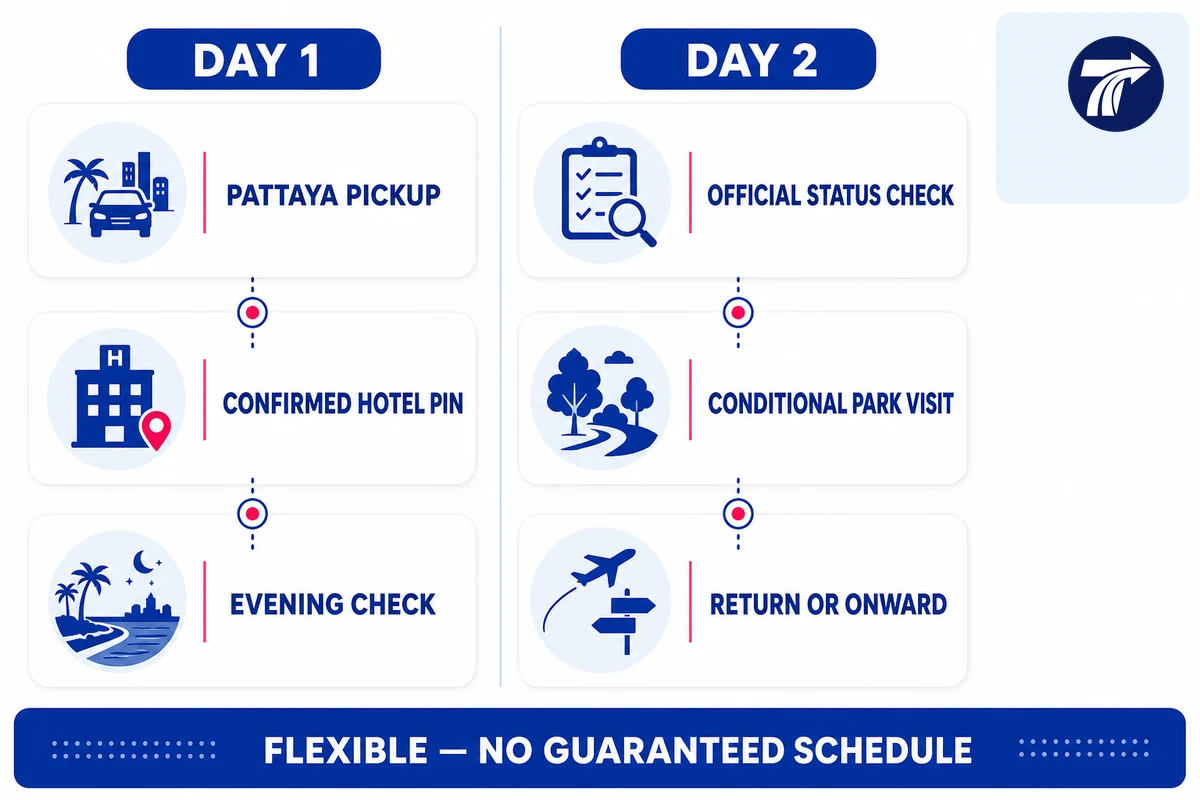
Treat this sequence as a planning framework rather than a timetable:
- Day 1 departure: Leave from the confirmed Pattaya entrance at the accepted pickup time.
- Day 1 transfer: Use only the route and stops written into the booking.
- Day 1 arrival: Reach the hotel entrance or handover point confirmed by the property and transport provider.
- Evening checkpoint: Review the current DNP notice, local weather information and the hotel's practical advice.
- Day 2 morning: Recheck park status, access, hours, fees, trail sections and swimming rules before setting out.
- Day 2 decision: Visit only if current official information and the group's circumstances support the plan; otherwise use a preselected alternative.
- Return or onward leg: Follow the separately confirmed pickup point, time, destination and vehicle scope.
This structure deliberately leaves out appointment times. A planning diagram cannot predict road conditions, the state of a trail or an operational decision by park management.
Day 1: Transfer to Kanchanaburi and Choose the Overnight Base
Choose the overnight base before asking for a transport quote. Send the complete property address, a pin at the real vehicle entrance and the property's contact details. Ask whether a road vehicle reaches reception or whether guests meet at a gate, pier or other handover point. Do not infer any special access arrangement from a map or marketing photograph.
A town base can make arrival and general services easier to organize, but it creates a separate Day 2 road movement toward the park. A base closer to Erawan may reduce that movement, yet it can fall outside a standard route boundary or have different final access. A riverside stay may be attractive for its own reasons, but it should not be treated as automatically convenient for the park.
If historical visits around the Bridge are also important, avoid forcing them into the same park morning. Use the River Kwai itinerary to plan those visits separately. For Erawan, keep Day 1 simple enough that late arrival does not undermine the following morning.
Confirm check-in hours, late-arrival procedure, luggage storage and any property transfer directly with the accommodation. Hotel charges and services are separate from the road booking unless an accepted quote explicitly says otherwise.
Day 2: Check Park Status Before Setting Out
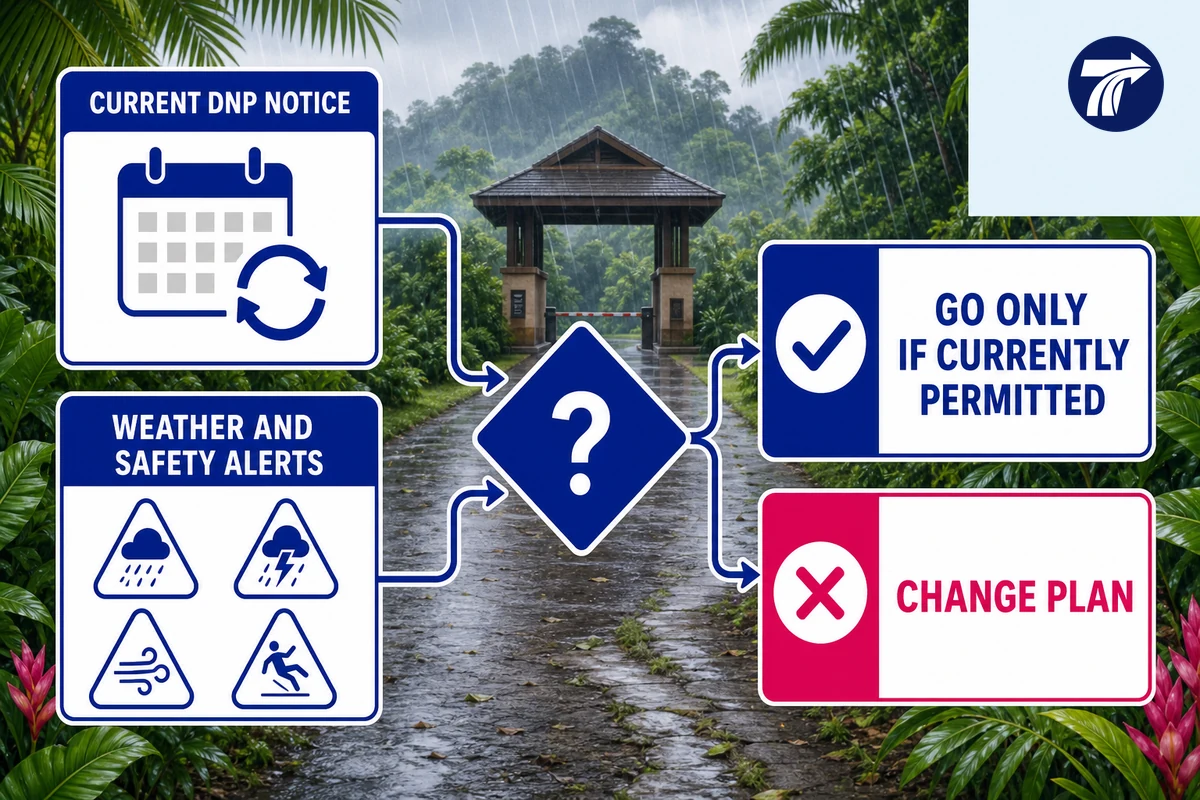
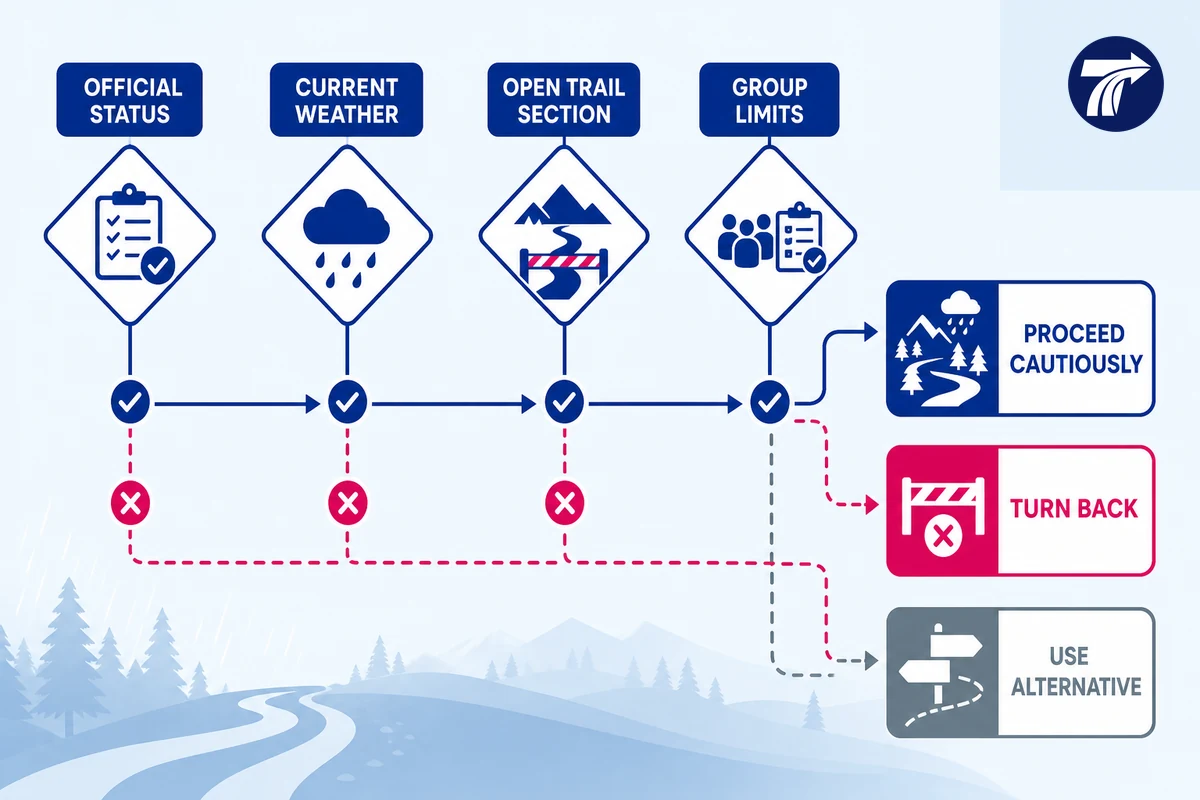
Open the current Department of National Parks, Wildlife and Plant Conservation channel on the evening before the visit and again on Day 2. Look for closure, partial access, fire, smoke, flood, weather, road or safety notices. If a notice is unclear, use the park's current official contact route rather than relying on an old social post or an aggregator summary.
DNP notices from April 2026 show why this step matters. The department announced a temporary closure on 21 April because of fire and PM2.5 conditions, then announced reopening from 22 April after conditions improved. Those dated notices are evidence that status can change quickly; they are not evidence that the park is open today.
Build a stop/go checkpoint into the morning. If the current status is unsuitable, do not pressure the driver or hotel to override it. Use an alternative that has been researched separately, or change the transport request through the original booking thread and wait for written acceptance.
Hours, Fees and Access Must Be Rechecked
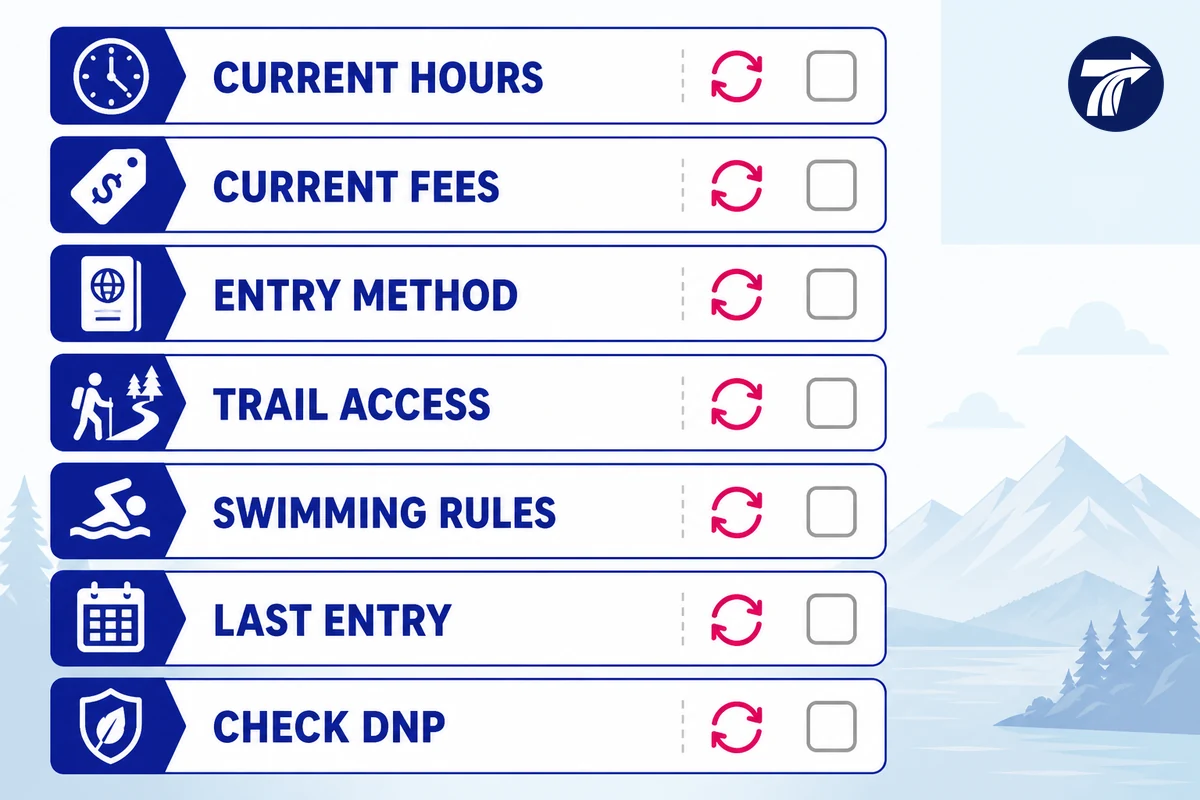
Do not treat fixed hours, fees, last-entry times, e-ticket rules or trail access assumptions as permanent travel-day facts. Verify them through DNP immediately before travel. The same applies to which waterfall levels or facilities are accessible and whether any route, campsite or accommodation area has restrictions.
Park admission is not part of a private-transfer fare unless the written quote expressly includes it. Pay and arrange entry using the current park instructions. A transport confirmation can establish a vehicle endpoint; it cannot guarantee admission, queue length, a ticket, a trail opening or permission to swim.
If the group has a fixed return pickup, compare it with the park's current access information and allow time to leave the site, retrieve belongings and reach the agreed meeting point. Do not ask a driver to wait beyond what the confirmation states.
Pack for Wet Trails, Swimming and Changing Conditions
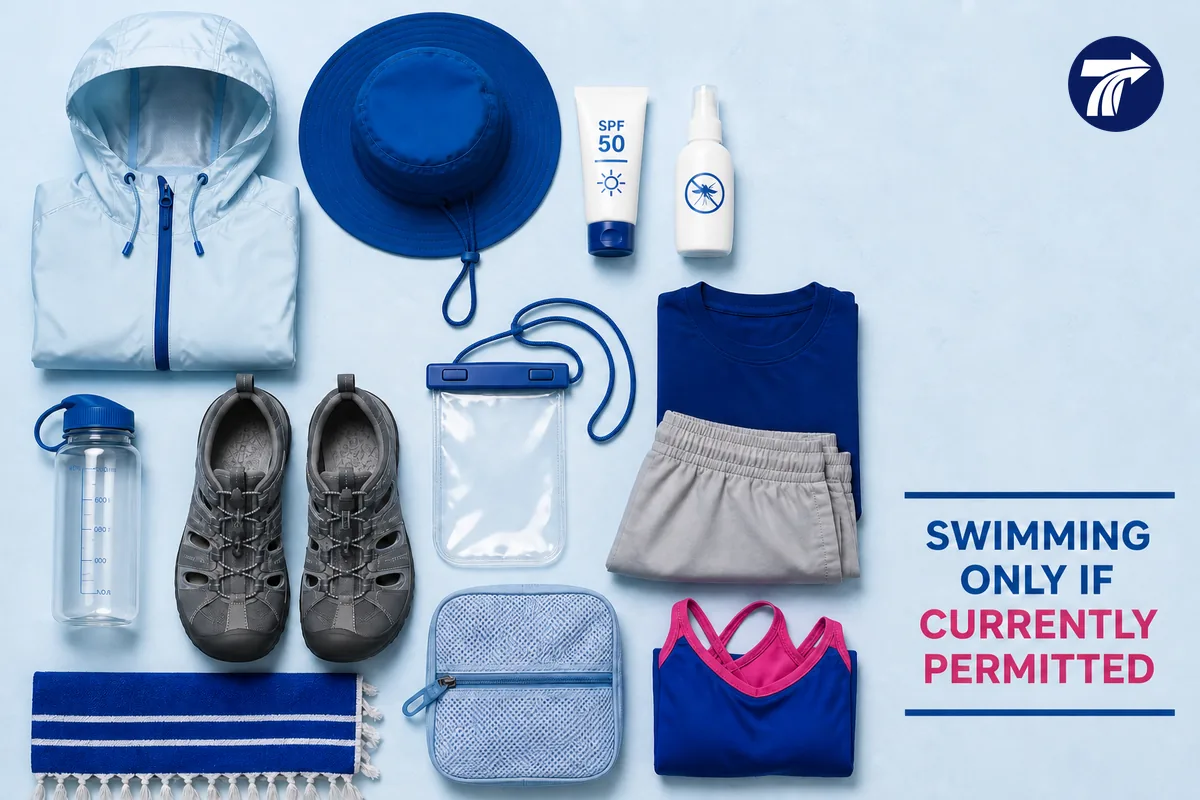
Pack for a nature visit whose conditions may change. Useful items can include securely fitting footwear with grip, a light rain layer, drinking water, sun protection, insect protection, a dry bag or waterproof pouch, and a change of clothes. Keep essential medication and travel documents protected and with the traveller who needs them.
Swimming must remain conditional on current park permission and the conditions at the specific area. Bring suitable clothing only as preparation; do not assume water access will be allowed. Follow barriers and staff instructions, avoid slippery edges, never climb beyond permitted areas and do not pose in unsafe positions for photographs.
Keep the load practical but declare it honestly in the vehicle request. Wet bags, pushchairs, child equipment and bulky outdoor items still count toward the complete luggage inventory. Ask where wet clothing can be changed or stored instead of assuming the vehicle or hotel provides a facility.
Weather, Trail Safety and Time Buffers
Weather at the destination can differ from Pattaya and can affect water, surfaces, visibility and park operations. Check current official warnings and a reliable forecast close to departure. A pleasant forecast does not cancel a DNP restriction, and an earlier reopening notice does not override a new closure.
Match the day to the least mobile or least confident member of the party. Current trail access does not prove that every open section suits every visitor. Ask the park about present conditions and turn back if signs, staff or personal limits indicate that continuing is unwise. This guide gives no medical or fitness assurance.
Time buffers belong around every transition: hotel departure, park entry, walking, changing clothes, returning to the vehicle and the onward road journey. The buffer protects the itinerary from small delays; it is not a promise that the driver will wait indefinitely. State the required pickup structure before the quote is accepted.
Transport Booking Versus Park, Hotel and Food Arrangements
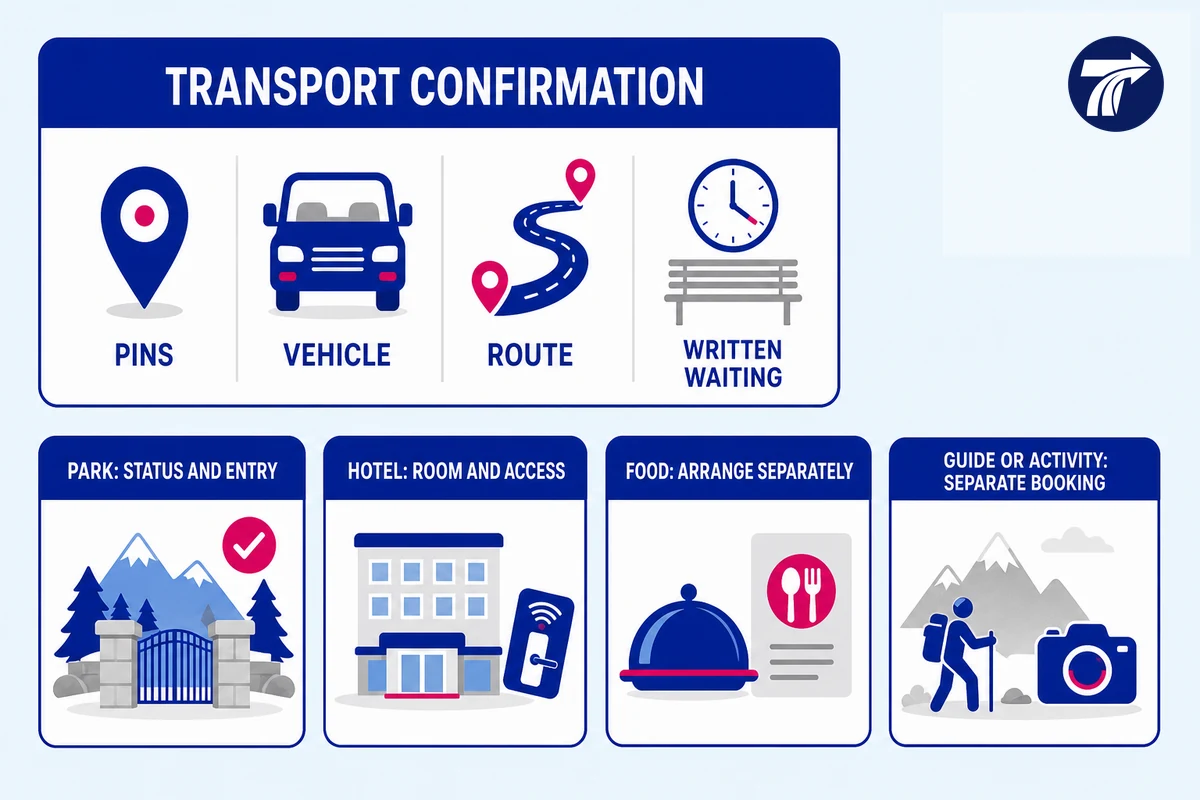
Keep responsibilities in separate written records:
- Private transport: named pickup and drop-off pins, vehicle class, passengers, luggage, accepted stops, written waiting, fare, return or onward leg.
- National park: current status, access, hours, entry procedure, fees, trail sections, swimming rules and safety instructions.
- Hotel: room, payment, check-in, luggage storage, late arrival, road entrance and any property-operated handover.
- Food and drinks: opening, availability, payment, dietary needs and whether supplies should be carried.
- Guide or activity: qualifications, scope, meeting point and fee if a separate service is wanted.
The private-taxi booking checklist explains the details needed for a road quote. It does not replace DNP or hotel confirmation. Tickets, national-park fees, guiding, accommodation, meals and drinks are outside the transfer scope unless expressly added to a written quote.
Why the Exact Hotel Pin Matters
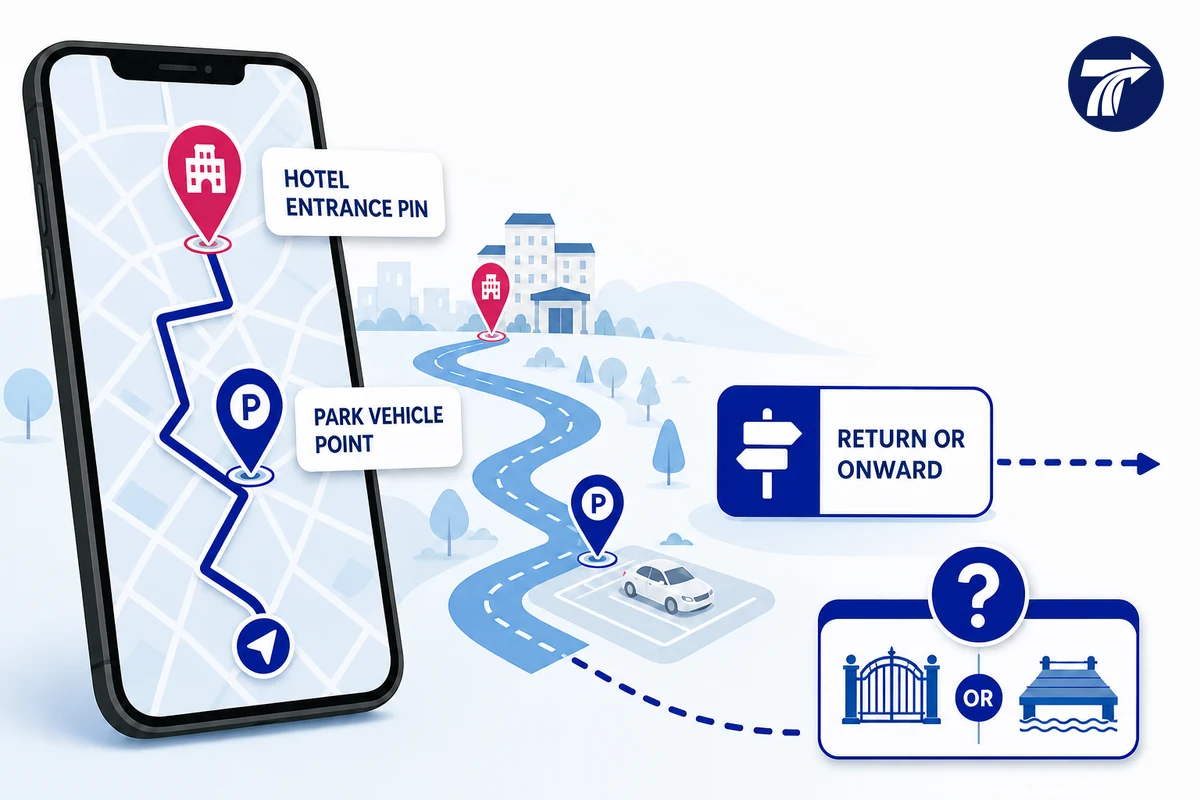
“Kanchanaburi,” “Erawan area” and “River Kwai resort” are not precise drop-off instructions. Put the pin on the location where the road vehicle is expected to stop, then compare it with the property's own address and arrival message. If a search result points into water, to a back gate or to a similarly named property, ask the hotel to correct it.
Send the same verified pin to the transport provider and ask whether it falls within the quoted route. A distant road, gate, pier or other final-access condition may require a custom quote. The property should confirm its own handover; the transport provider should confirm the vehicle endpoint. Neither should be guessed by the traveller.
Plan the Return or Onward Transfer
Decide whether Day 2 ends in Pattaya, another Kanchanaburi hotel, Bangkok or somewhere else. A return is not an open-ended extension of the outward transfer. It needs a date, pickup time, exact meeting point, destination, passenger-and-bag load and written fare of its own.
If park conditions change, update the transport team in the booking thread. A new pickup point, earlier departure, extra hotel stop or substitute attraction can change the route and price. Wait for acknowledgement before relying on the revision.
Travellers still choosing between private and scheduled travel can use the Pattaya–Kanchanaburi transport comparison to map every connection. Whichever mode is chosen, leave the park only through current official access and meet the vehicle at the confirmed point.
Frequently Asked Questions
Is Erawan National Park open now?
This article does not make a current-status claim. Check the latest DNP notice shortly before travel and again on the day, because closures, partial access and operating conditions can change.
Can I visit Erawan Falls as a day trip from Pattaya?
A same-day plan may be considered, but it is less resilient to a long road journey and changing park conditions. An overnight creates a separate morning for current checks without promising entry.
Are park tickets included in the taxi fare?
No, not unless an accepted written quote expressly includes them. Admission, e-ticket arrangements, guiding, food and accommodation should be handled separately.
Is swimming always allowed?
No promise is made. Verify the current rule for the intended date and area, then follow park signs and staff instructions. Never enter a closed or restricted section.
Where should I stay for an Erawan visit?
Choose a property based on its confirmed road access and the Day 2 route, not only its marketing location. Send the exact entrance or handover pin for a coverage check.
Does the driver wait while we visit the park?
Only waiting written into the confirmed booking should be treated as included. State the required vehicle movements and approximate structure before accepting the quote.
What happens if the park closes after transport is booked?
Use the booking thread to request a revised transport plan. Do not replace the park with a distant stop or extra waiting period unless the provider accepts the change in writing.
Request the Transport Portion in Writing
Send the Pattaya pickup pin, verified hotel entrance, intended park vehicle endpoint, dates, local times, all passengers, complete luggage list and the return or onward plan. Use the official contact form to request the transport portion in writing, while keeping park status, entry, hotel, meals and activities under their own current confirmations.