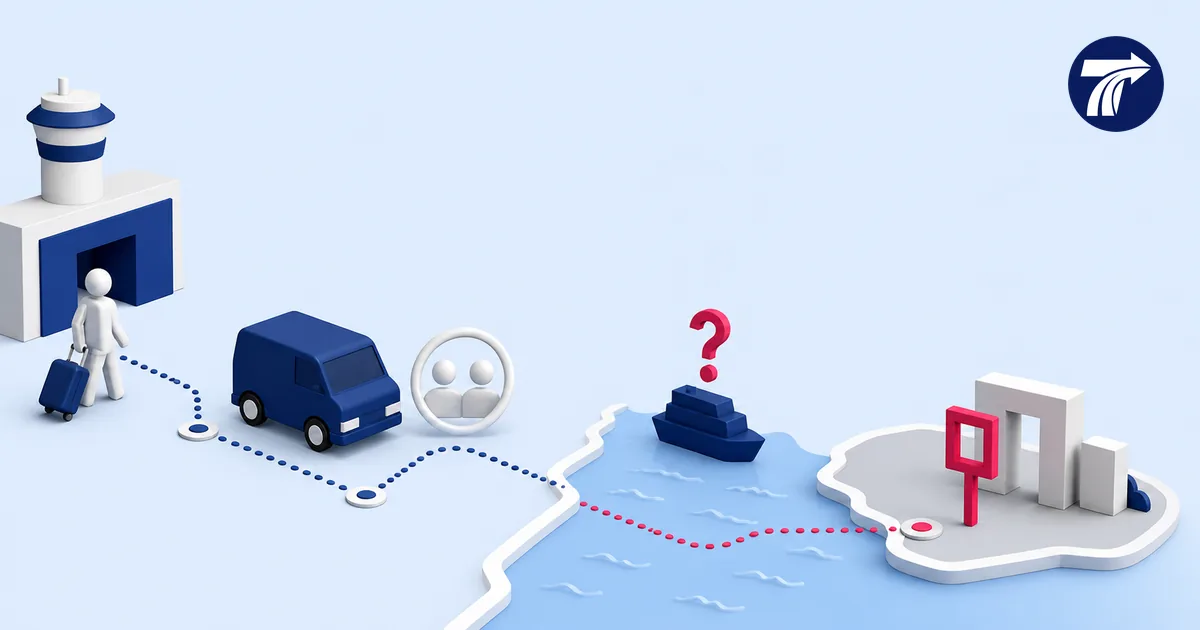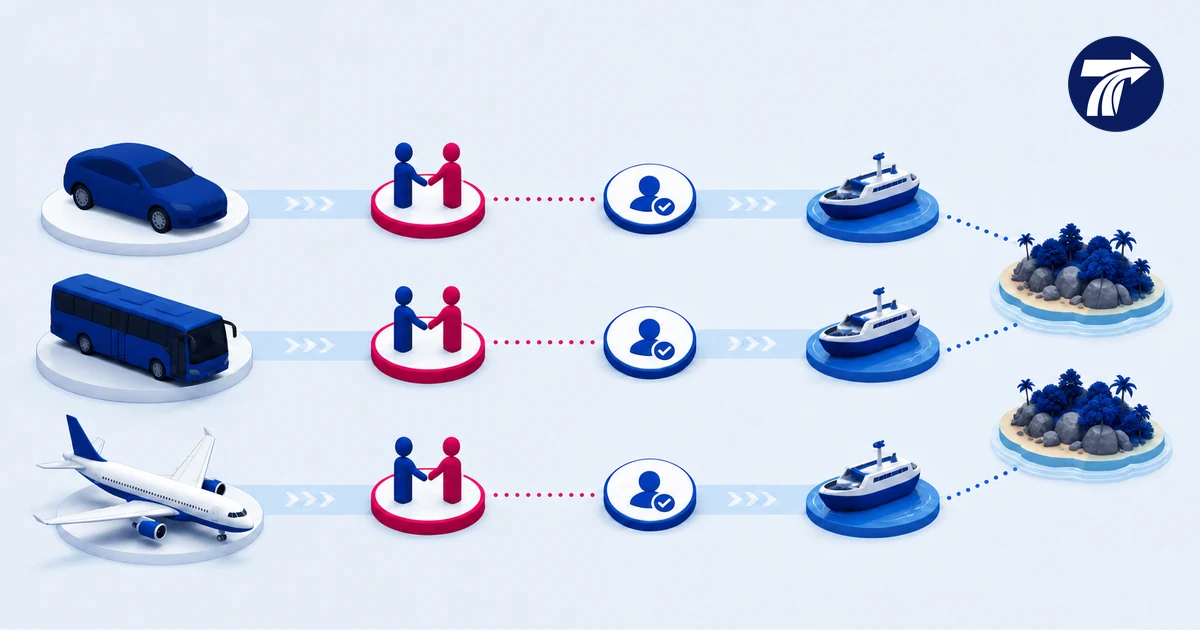
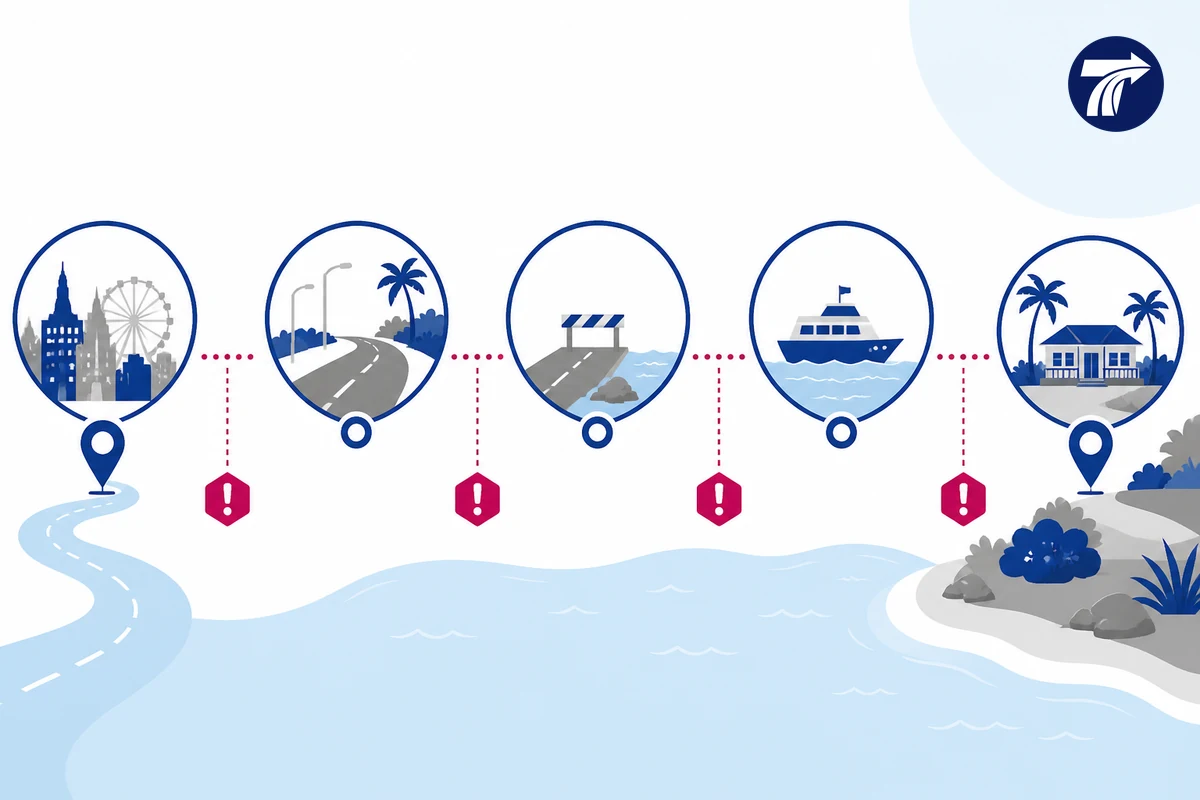
Comparing Bangkok to Koh Samet transport means comparing a chain, not one vehicle. Every workable plan needs a Bangkok starting leg, a road journey to a confirmed Ban Phe-area point, a separately verified passenger-boat stage and a plan from the island arrival point to the accommodation.
No complete current first-party through-service evidence is available here for a bus or minivan chain covering the operator, travel date, exact Bangkok boarding point, exact Ban Phe arrival point and onward sea connection. That neither proves nor disproves that an individual road service operates. Verify each link directly and do not rely on remembered timetables or fares.
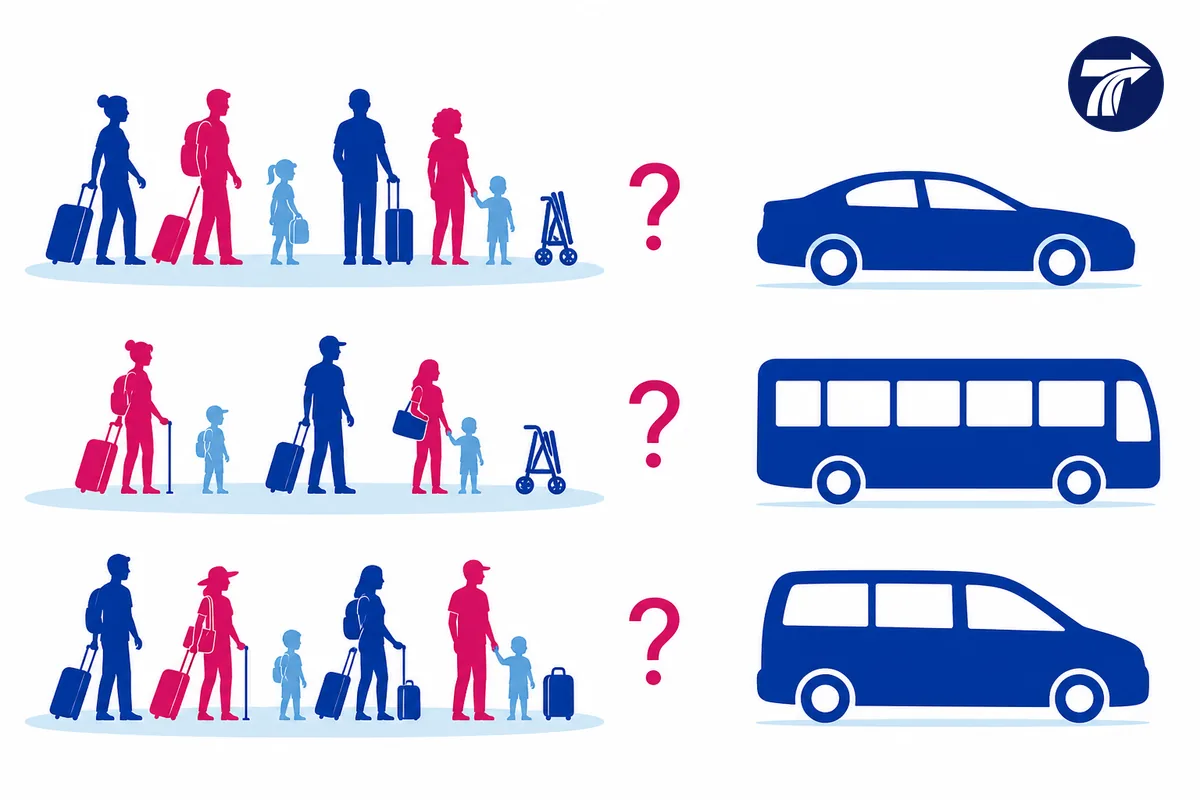
Private road travel, a scheduled bus and a shared minivan can each suit a different confirmed trip. The useful question is not which mode wins in general. It is which available option resolves the real endpoints, baggage, travellers, handoffs and change risks for the chosen date.
Compare the Complete Journey, Not One Ticket
Write the journey as five separate decisions:
- How will everyone and every bag reach the Bangkok pickup or boarding point?
- Which road provider confirms the journey and the actual Ban Phe-area endpoint?
- How will the party move from that endpoint to the sea operator’s reporting point if they differ?
- Which sea operator confirms the ticket, boarding and baggage conditions?
- What movement is needed from the island arrival point to the property?
An option is incomplete while a material row has no answer. A low-looking partial cost cannot be compared fairly with a quote that covers a different set of road movements. Likewise, one confirmed road leg does not guarantee the passenger boat or island leg.
Use a simple evidence table while comparing:
| Decision | Private road vehicle | Scheduled bus | Shared minivan |
|---|---|---|---|
| Bangkok start | Exact requested entrance | Confirmed terminal or stop plus access | Confirmed pickup format and access |
| Road arrival | Written named endpoint | Operator-stated arrival point | Operator-stated arrival point |
| Bags | Whole load accepted in writing | Current operator baggage rule | Current operator baggage rule and storage answer |
| Changes | Provider’s written terms | Operator’s current change process | Operator’s current change process |
| Sea and island stages | Separate | Separate | Separate |
The table does not rank the modes. It shows which questions must be answered in a comparable way.
Option 1: A Private Road Vehicle
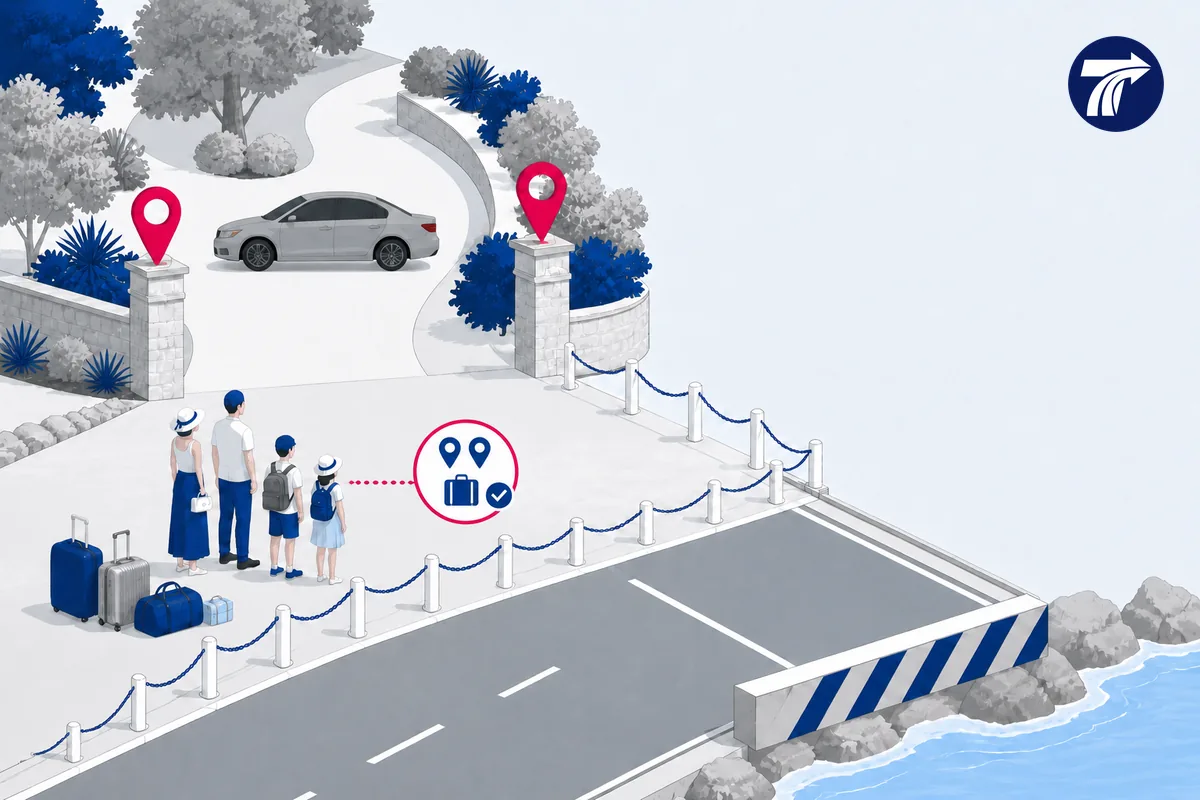
A private booking can be requested between an exact Bangkok vehicle entrance and an exact named, road-accessible Ban Phe endpoint. Use the Bangkok-to-Ban-Phe private-transfer details to prepare the route and load, then rely on the accepted quote for the actual road price.
The accepted reply should identify both road points, the vehicle class, all passengers, the combined luggage load, requested stops and the quoted amount. The public Services & Rates page has no direct Bangkok–Ban Phe or Bangkok–Koh Samet row supporting a price here. Its Pattaya–Koh Samet (Ban Phe) row is not a substitute and must not be copied or reversed.
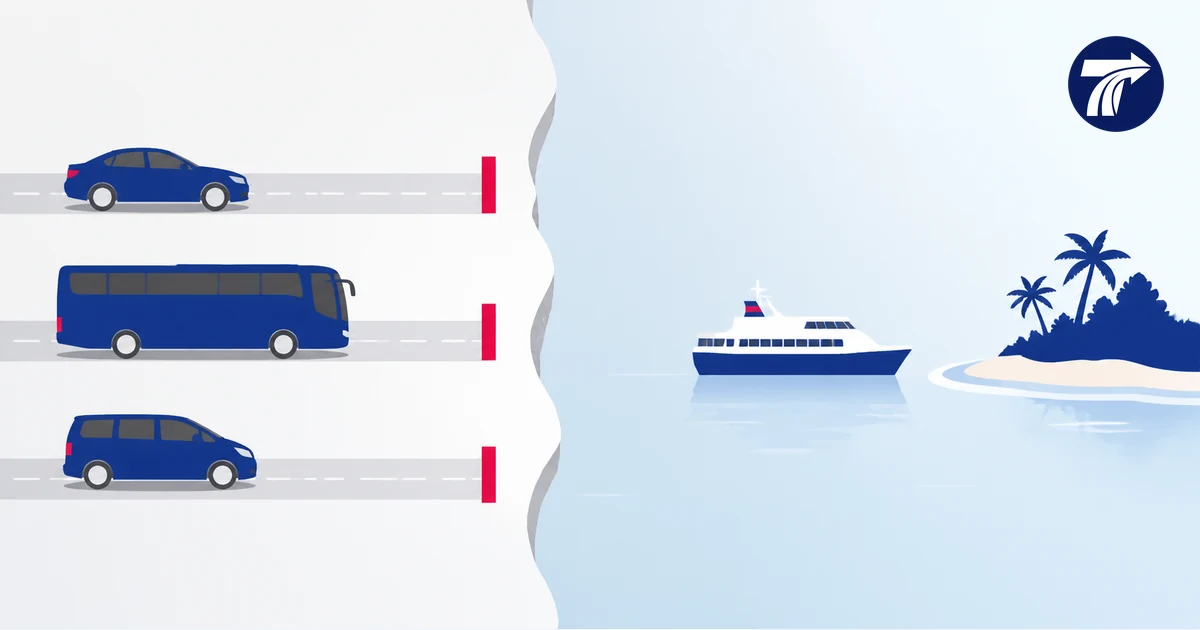
This option can reduce some road-side handoffs when the quote matches the actual entrances. It does not eliminate the sea handoff. The car does not become a passenger boat, and the road provider does not automatically control tickets, boarding, baggage rules, island arrival or property access.
A private quote is not ready if it replaces the submitted Ban Phe point with a broad place name, ignores a large item or leaves a requested stop unanswered. Resolve those gaps before treating it as a complete road option.
Option 2: A Scheduled Bus
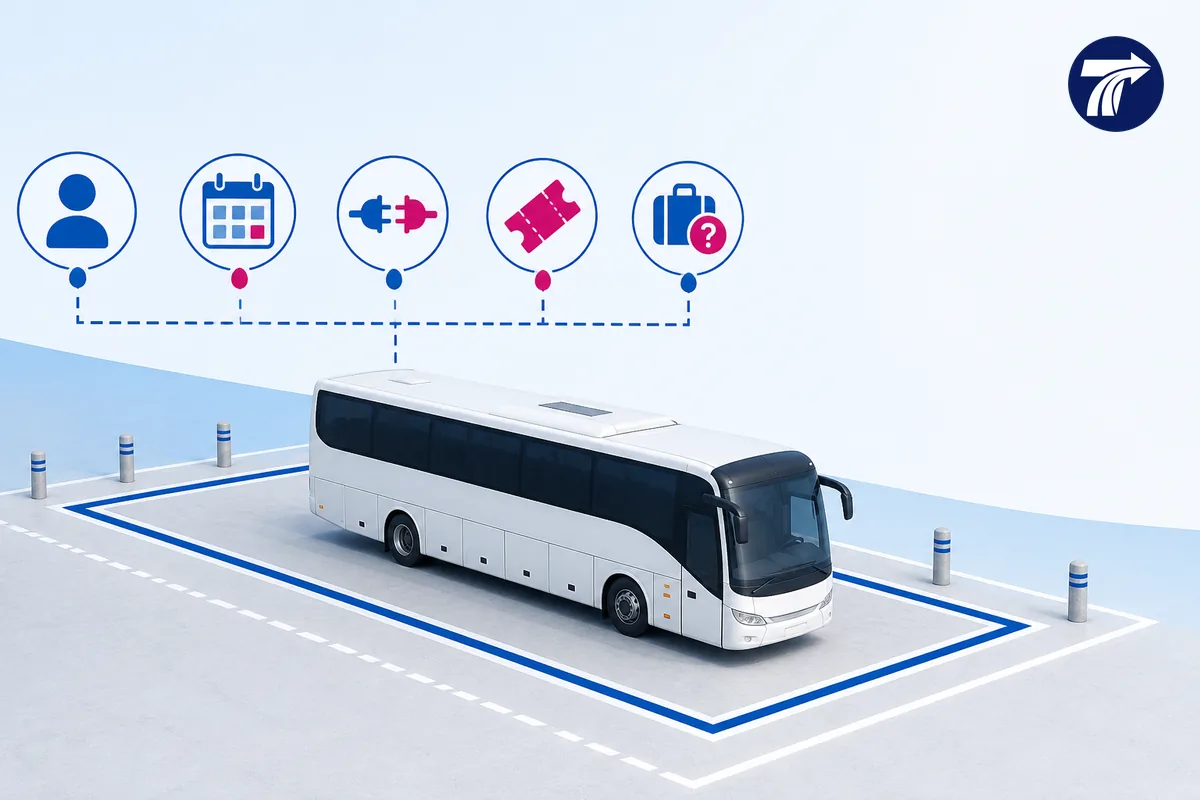
Begin with the operating company, not with an undated timetable copied by a directory. The Transport Company’s official channels can be a starting point for direct checks, but their existence alone does not prove a particular Bangkok-to-Ban-Phe journey for the traveller’s date.
Ask the identified operator to confirm the date, physical Bangkok boarding point, physical arrival point, reservation method, reporting instruction and baggage rule. Also ask whether any road change is required. The response should make clear which company operates each segment and who handles amendments.
Then plan access to and from the stated points. A bus terminal label does not explain how a family with cases reaches it from a Bangkok hotel. A Ban Phe-area arrival does not prove it is the sea operator’s reporting place. Add both local movements to the comparison rather than hiding them inside the main ticket.
Reject an unverified chain when the operator is unnamed, the reply has no date, the physical points cannot be located or a required connection remains assumed. A reseller result may suggest a question, but it cannot replace the operator’s current answer.
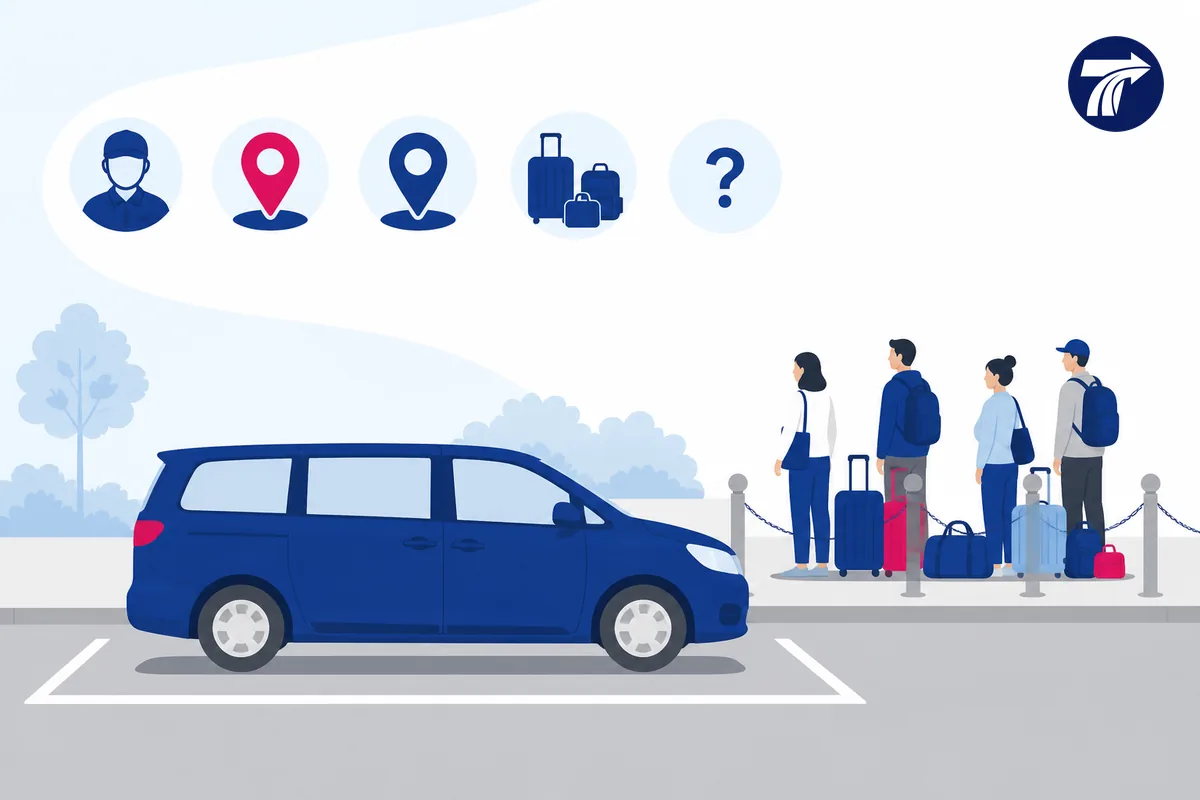
“Minivan” describes a vehicle as often as it describes a service. Confirm who actually operates the proposed journey and whether the pickup is a terminal, roadside stop, office, hotel-area collection or another arrangement. Do not infer one format from a photo or an old review.
Ask for the dated service, exact Bangkok collection point, Ban Phe arrival point, reservation process and change contact. If another vehicle or agent is involved, identify the handoff and the party responsible for it. A location disclosed only after payment should still be clear enough to assess before the travel plan becomes dependent on it.
Luggage deserves a direct answer. State the number and size of cases, backpacks, pushchairs, mobility aids or unusual items. Ask where they are carried and whether that load is accepted on the selected departure. Do not assume unused seats, aisle space or an open hatch can solve a storage problem.
Shared collection can also require more flexibility than a private entrance pickup. Confirm the reporting instruction and how a change will be communicated. If the answer remains vague, keep the option unresolved rather than guessing where to stand.
Terminals, Stops and the Ban Phe Handoff
Place names can disguise important walking or transfer gaps. For every road option, record the full name and map pin of the Bangkok start and Ban Phe finish. Compare the latter with the current physical reporting point given by the chosen sea operator.
If the points differ, identify the separate movement between them. Do not assume it is walkable, included, available on demand or suitable with children and bags. Ask the relevant operator or accommodation for practical current instructions and decide whether the extra handoff fits the group.
The passenger-boat stage needs its own confirmation. Obtain the operator’s identity, ticket method, reporting place, boarding process and baggage conditions. No boat fare, timetable, duration, last service or guaranteed connection is stated here. Those facts are date-sensitive and belong to the responsible current operator.
The island side is another boundary. Confirm where the chosen service arrives and ask the property how guests should continue. A Bangkok road ticket cannot establish an island arrival point, and a property name cannot establish included onward transport.
Baggage, Children and Group Fit
Count movements as well as seats. A solo traveller with one manageable bag may evaluate transfers differently from an adult managing children, several cases and a pushchair. A group may need to know whether it can remain together and whether every item is accepted on each vehicle.
For private road travel, send one combined inventory and obtain a written vehicle-fit answer. For buses and shared minivans, use the current operator’s baggage rule and ask about each non-standard item. A generic allowance quoted by a reseller does not confirm acceptance by the actual operator.
Children should be included in every headcount. Ask each provider about the relevant seating or restraint arrangement without assuming a universal child seat. If the trip requires assistance, a mobility aid or step-free access, describe the need and wait for a direct answer.
At each handoff, decide who can move the full load and whether the physical path is workable. Stairs, long walks, crowded boarding areas or a last local movement may affect the choice even when the principal road service has space.
Late Arrival and Change Risk
Do not build a chain around a remembered final departure or an exact road duration. Verify any departure instruction with the responsible operator and allow for road uncertainty. Road conditions, pickup access, operator changes, weather and boarding instructions can alter the sequence, while independently operated stages do not create a protected connection.
If the Bangkok start follows a flight or another service, ask the road operator what information and change notice it requires. Do not assume automatic monitoring, a guaranteed pickup adjustment or unlimited waiting. For scheduled road transport, find the current operator’s amendment and missed-service process before relying on it.
Keep a fallback at the decision level rather than promising a particular replacement. Decide what the party will do if the chosen road stage, sea instruction or island arrival plan can no longer be confirmed. A flexible accommodation conversation and a reachable provider contact can be more useful than a timetable screenshot.
Check the official Thai Meteorological Department marine forecast and follow the sea operator’s current instruction. A forecast is not a passenger timetable, and an operator reply is not a guarantee of road conditions. Keep those sources in their proper roles.
A Verification Workflow for Public Transport
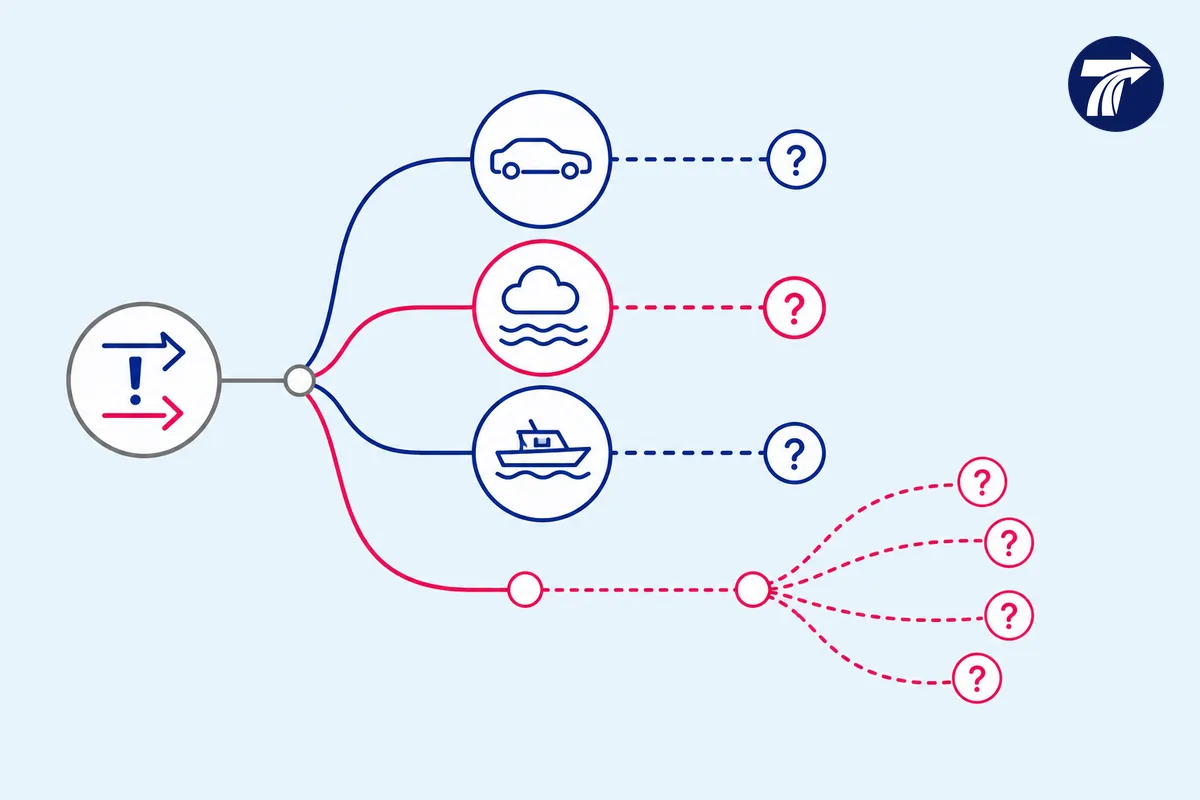
Use the same short process for every bus or minivan lead:
- Identify the company that will operate the vehicle.
- Open a channel demonstrably controlled by that company.
- Ask about the intended date and both physical road points.
- Confirm how to reserve, when to report and how changes are handled.
- Describe the complete baggage load and request the current rule.
- Identify every transfer or separately operated segment.
- Verify the sea stage with its own operator and the island stage with the property.
- Recheck close to travel and retain the dated replies.
Stop when the source cannot identify the operator, date or physical points. Also stop when a material baggage answer or final transfer remains unavailable. “Probably” is not a confirmation category.
Public search results and travel forums can help discover names, but use them as leads only. Do not promote an old fare, timetable or pickup point into a current fact. The official Transport Company FAQ can explain how to approach its own service information, yet a general FAQ still cannot prove this exact complete chain.
Which Option Fits the Confirmed Trip?
Choose after filling the same evidence fields for each candidate. A private road booking may fit when exact entrances and the whole load are accepted. A bus may fit when its operator confirms the dated service and the terminal access works. A shared minivan may fit when its pickup format, storage and arrival point are clear.
Then compare the remaining handoffs. Which option leaves an unresolved local transfer? Which answer covers the children and bags? Which chain can be changed through an identified provider? Which arrival instruction matches the accommodation’s current advice?
There is no universal winner. A mode that fits one lightly packed traveller may be unsuitable for a family, and a direct-looking listing may be less useful than a two-stage plan whose operators and endpoints are verifiable. Select the complete, supportable chain available for the real date.
Frequently Asked Questions
Is there a confirmed direct bus from Bangkok to Koh Samet?
No complete current first-party evidence available here confirms one through road-and-sea service. Ask an identified road operator about the intended date and exact endpoints, then verify the passenger boat separately.
Can I use an online timetable or fare from a search result?
Use it only as a lead. Confirm the operator, date, physical points, reservation method, baggage rule and changes through the operator’s current direct channel before relying on it.
Does a bus or minivan go onto Koh Samet?
No such through movement is asserted. Treat the Ban Phe road arrival, passenger-boat stage and island onward movement as separate unless the responsible providers give specific current written terms.
How do I compare costs without published figures here?
Collect current quotes or operator prices for the same complete chain, including access to the Bangkok start, the road journey, any Ban Phe transfer, the sea stage and island onward movement. Do not compare one partial ticket with a different scope.
Which option is easier with several suitcases?
That depends on written load acceptance and the number of handoffs. Send the complete inventory to each provider and examine how the bags move at terminals, boarding points and island arrival rather than assuming one mode always fits.
What should families ask before booking?
Confirm every child in the headcount, baggage and pushchair acceptance, any restraint request, physical handoffs and how the group remains together. No universal child-seat or assistance provision is promised.
Can I plan a guaranteed connection to the passenger boat?
No connection guarantee is made here. Confirm each stage independently, recheck current instructions and preserve flexibility for road, weather or operator changes.
What if a bus or minivan operator cannot confirm the Ban Phe arrival point?
Treat the option as unresolved. Without a physical arrival point, the traveller cannot assess the handoff to the sea operator or the suitability of the complete journey.
Confirm Every Stage Before Booking
Write down the Bangkok start, road operator, Ban Phe endpoint, sea operator, island arrival and property access. Keep only options whose responsible providers answer the material questions for the intended date. For a written road-vehicle request, use the official TOP PATTAYA TAXI contact page or call +66 86-829-8229; continue to verify the sea and island stages separately.