A Pattaya to Bangkok journey with children is easier when the family plans three things before booking: an appropriate restraint, a realistic comfort-stop plan and a vehicle matched to both passengers and luggage.
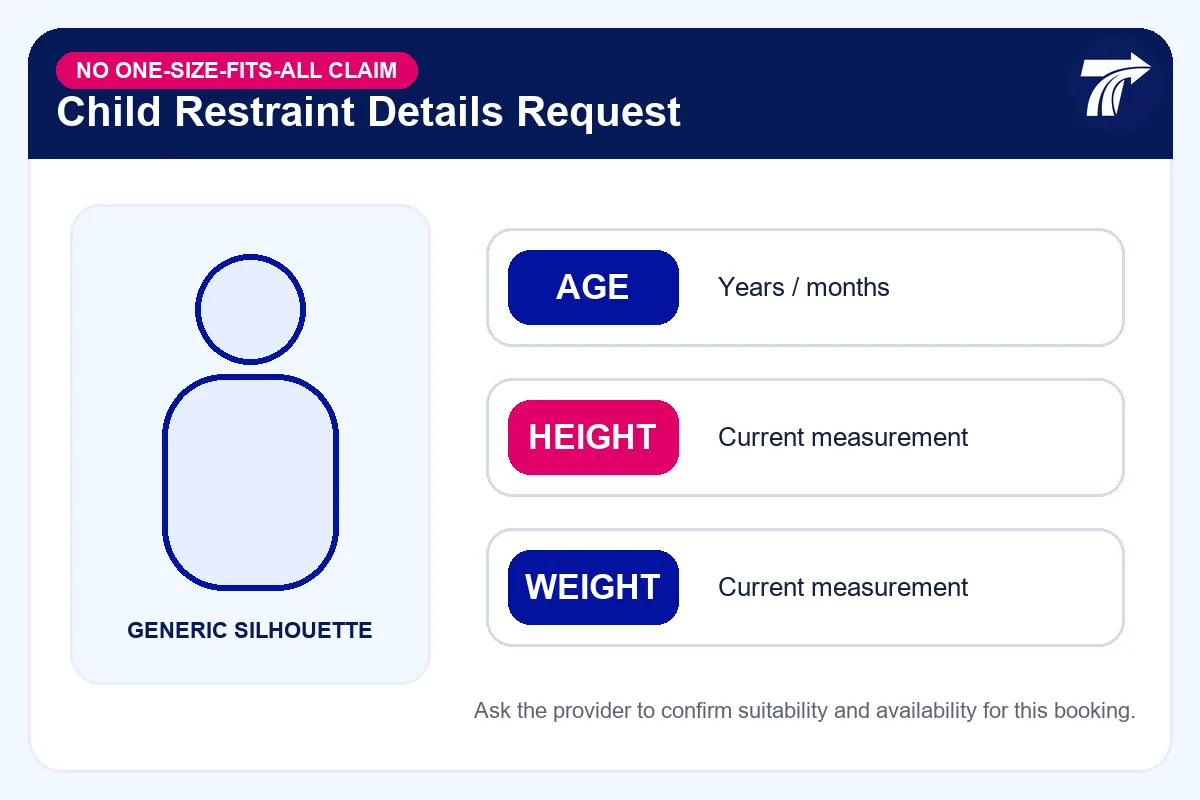
Child restraints are request-only. Send the operator each child’s age, approximate height and weight, plus every stroller and suitcase. Availability, suitability, installation arrangement and any charge must be confirmed in writing for the specific booking. Do not assume a restraint is free, available or guaranteed.
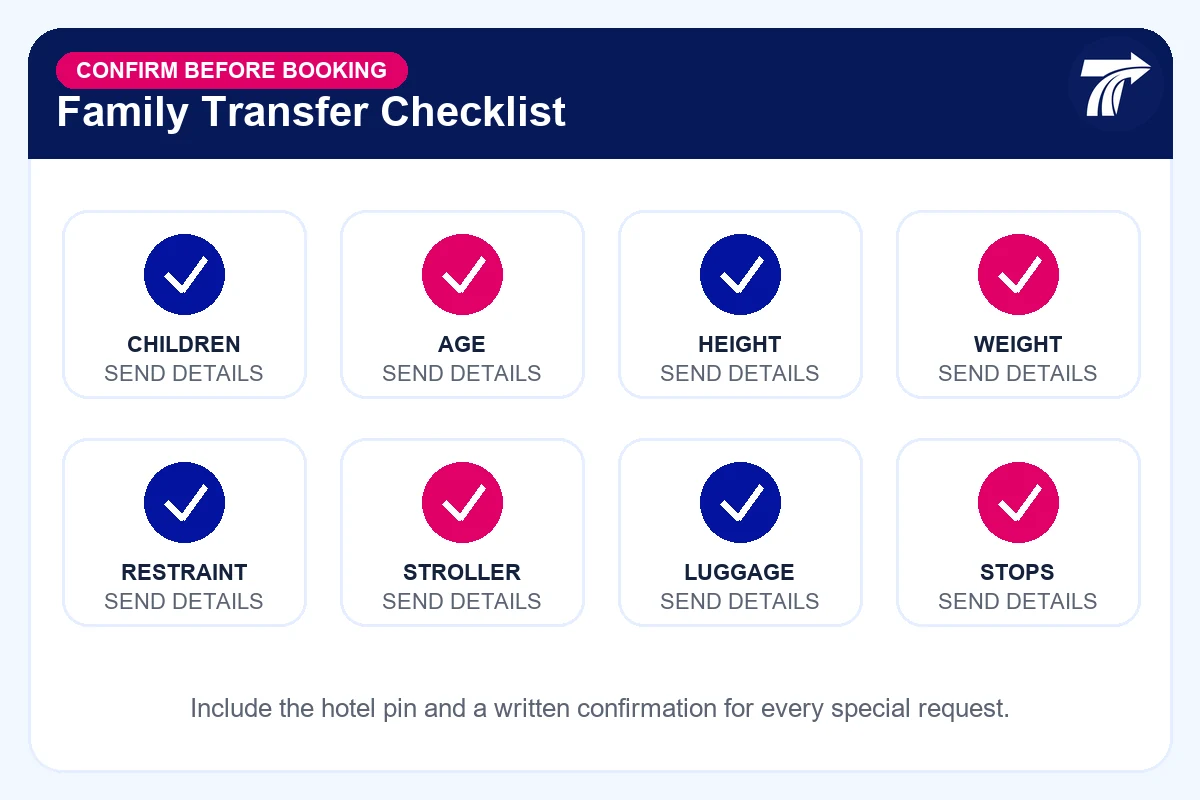
Family transfer checklist
- Exact Pattaya pickup and Bangkok destination
- Travel date and local pickup time
- Adults, children and each child’s age
- Child’s approximate height and weight for a restraint request
- Large bags, cabin bags and stroller
- Medicine and essential items kept accessible
- Preferred comfort-stop plan
- Required Bangkok arrival time
- Written vehicle, restraint and price confirmation
Use the full private taxi booking checklist when sending the request.
Plan the restraint before choosing the vehicle
The World Health Organization notes that appropriately selected and correctly fitted child restraint systems reduce injury risk. “Child seat” is not one universal product. The suitable type depends on the child and the restraint manufacturer’s instructions.
Tell the operator:
- age;
- approximate height;
- approximate weight;
- whether you are bringing your own restraint;
- the restraint model and attachment method, if known;
- any installation requirement.
Do not accept a vague assumption that any seat will work. Request a photograph or product detail only if the operator can provide it reliably, and check that it matches the child’s needs.
What the written confirmation should cover
Before relying on a provider-supplied restraint, confirm:
- whether child restraints are available;
- which types and size ranges;
- how far ahead they must be requested;
- whether the vehicle has the required anchorage;
- who installs and checks the restraint;
- whether there is a charge.
If those details are not confirmed, families should bring a suitable restraint they know how to use after checking compatibility with the assigned vehicle.
Count the stroller as luggage
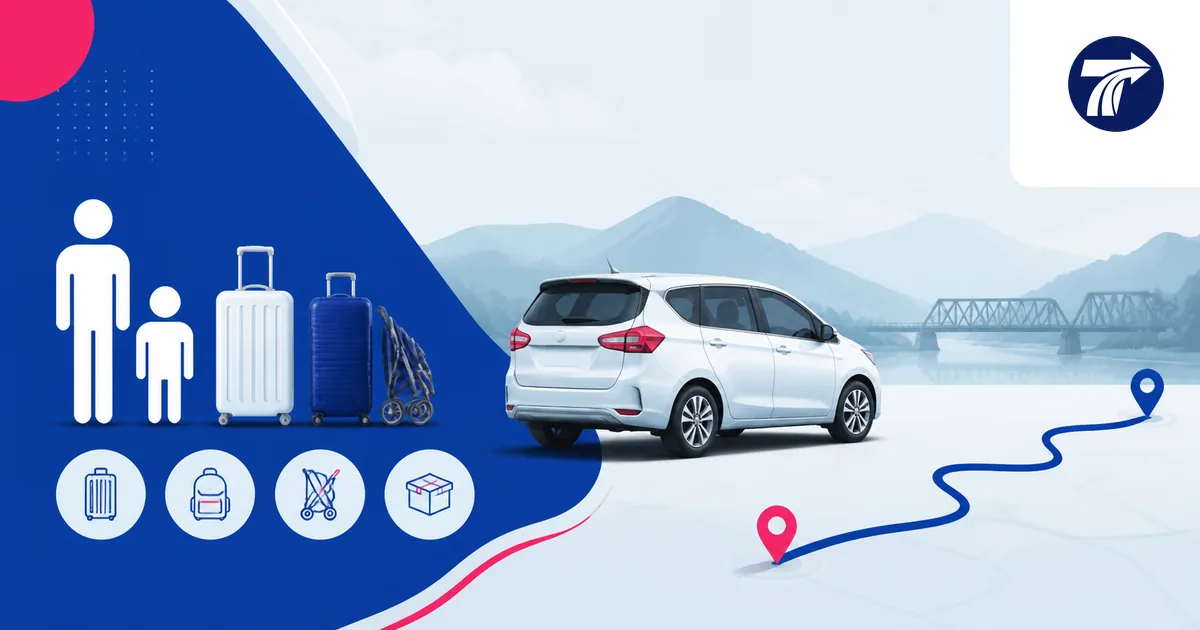
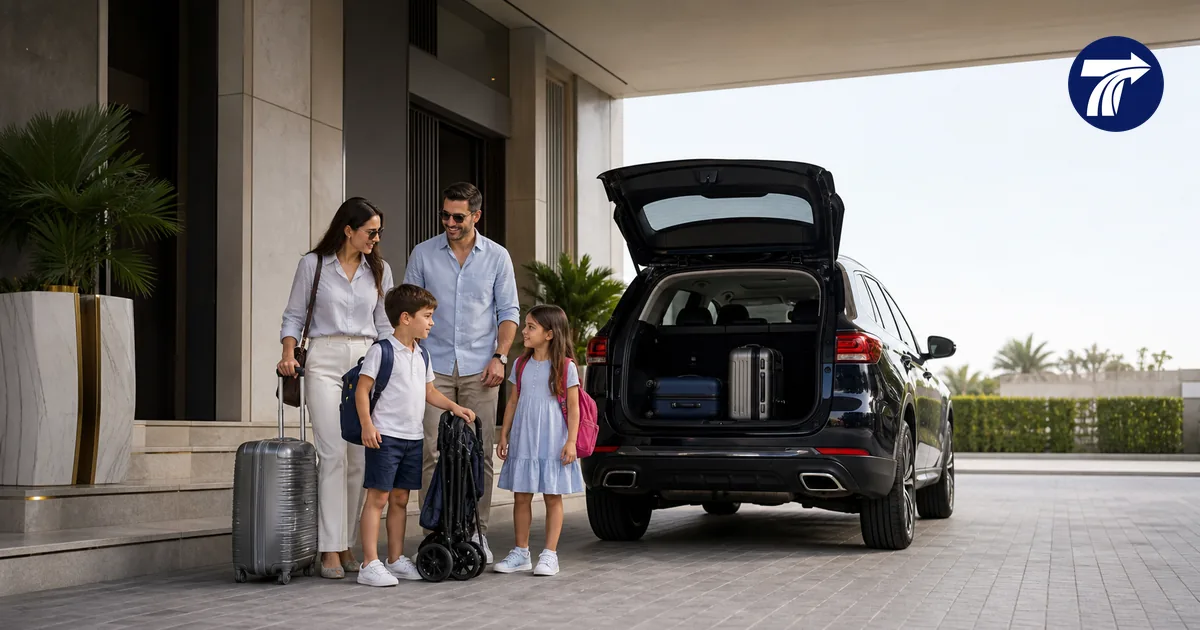
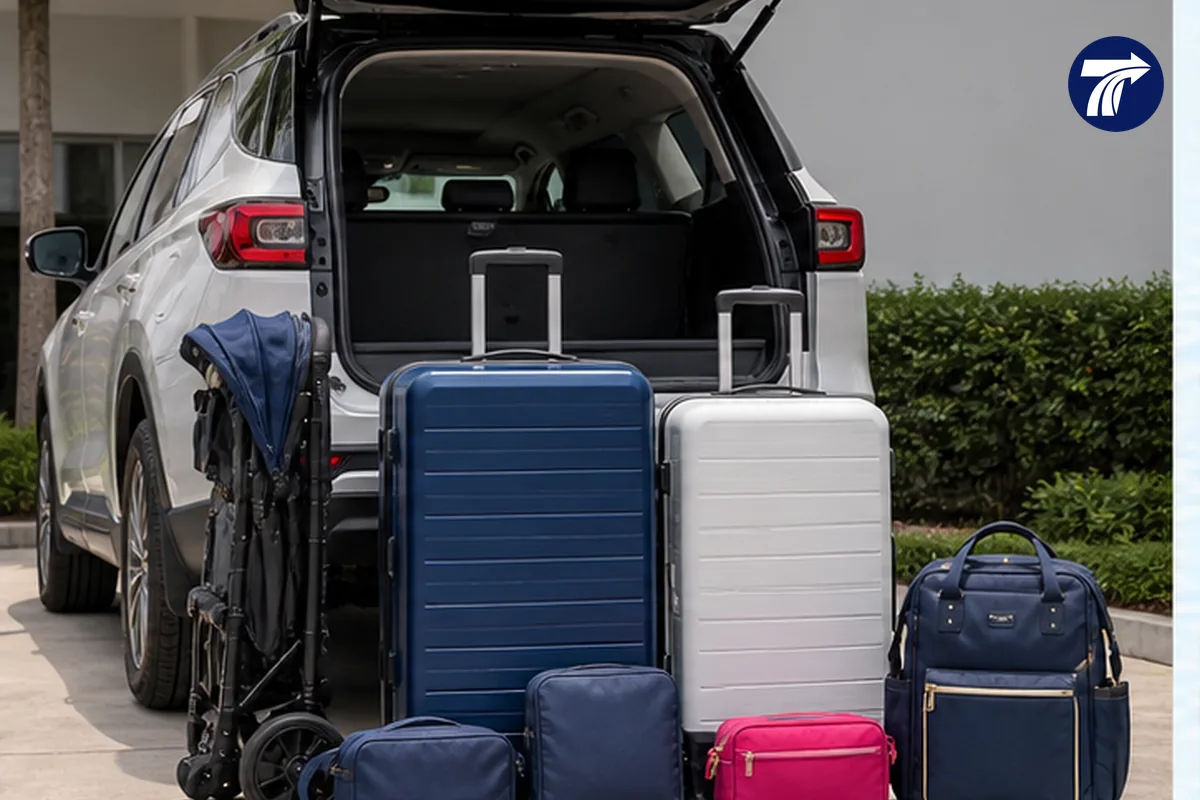
A folded stroller still occupies storage space. Describe whether it is a compact cabin-style stroller, a full-size frame or a double stroller. Add any detachable seat or carrycot.
Then list suitcases by approximate size. “Four bags” could mean four small backpacks or four rigid check-in cases; those loads are not equivalent.
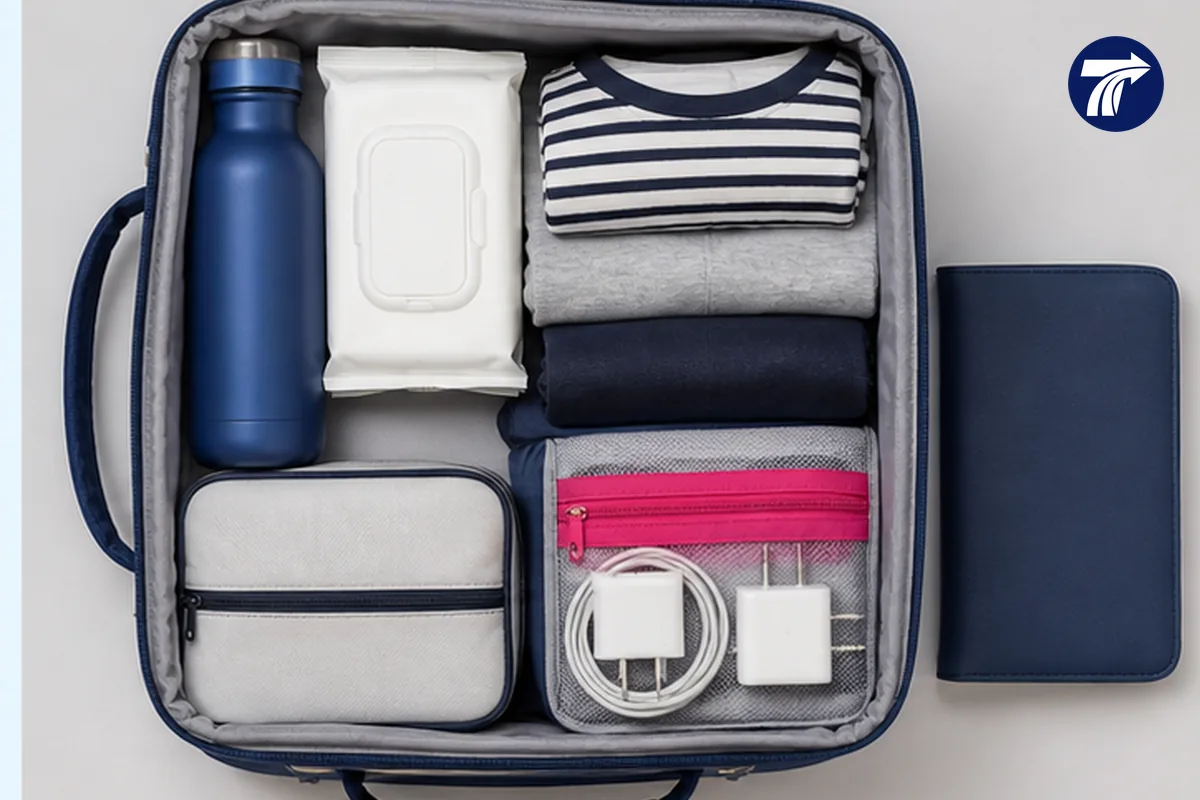
Keep the changing bag, medicine, water, wipes and one spare outfit accessible. They should not be trapped beneath large suitcases. If a child needs medication at a specific time, include that timing in the stop plan.
Choose a vehicle with the complete load
Do not select sedan, SUV or van from passenger count alone. Send the full family load and ask the operator to confirm the vehicle class.
A larger vehicle may offer more usable space, but actual configuration matters. The passenger, suitcase, stroller and child-restraint combination must be confirmed for the specific booking after the complete load is reviewed.
Review the fleet and vehicle guide for general vehicle information, then obtain written confirmation for the actual family load.
Agree on comfort stops
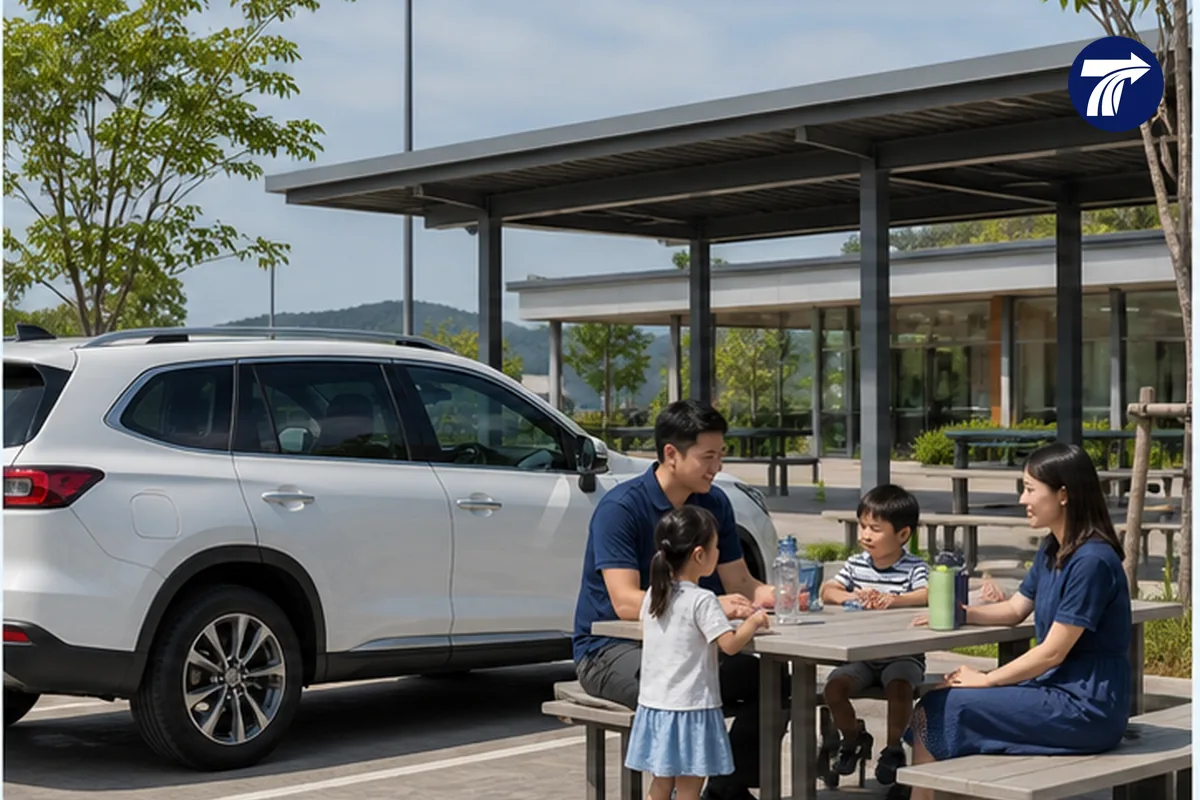
Young children may need a toilet, feeding or movement break. Discuss this before booking rather than asking for an unplanned detour after departure.
A useful plan distinguishes:
- a brief comfort stop along the practical route;
- a meal stop;
- a stop at a specific shop;
- collecting another passenger.
These are different requests. The operator should confirm how the chosen stop affects the itinerary and quote.
Even with a planned stop, remain flexible. A sleeping child may not need it at the expected point, while an urgent toilet need may occur earlier. Keep the operator informed and follow the driver’s choice of a safe stopping place.
Prepare for motion and temperature
Children can experience motion discomfort even on a motorway. Before travel:
- choose light food rather than a heavy meal;
- keep water available;
- pack motion-sickness supplies recommended by your healthcare professional;
- prepare a sealable bag and wipes;
- use a light layer for air conditioning;
- keep screens and books optional if they worsen nausea.
This is general travel planning, not medical advice. Ask a qualified clinician about medication or a child’s health condition.
Choose the pickup time around the child and deadline
If the Bangkok check-in is flexible, choose a time that fits the child’s routine. If there is a fixed appointment, work backwards from the required arrival and allow a traffic margin.
Do not schedule the journey so tightly that one toilet stop creates a crisis. Bangkok road conditions vary, and no operator should guarantee a precise duration.
For very early trips, prepare bags, clothes and breakfast the night before. The early-morning transfer planning guide includes a deadline-first checklist.
Pack one accessible family bag
Keep one small bag in the passenger area if it can be safely stowed. Useful contents include:
- passports and booking documents;
- phone charger or power bank;
- water and simple snacks;
- wipes and tissues;
- one clothing change;
- nappies and disposal bags;
- essential medicine;
- a small familiar toy.
Avoid loose hard objects that could move during sudden braking. Keep aisles and seat-belt access clear.
Prepare the Bangkok drop-off
Send the full hotel address and correct lobby. If the property is in a narrow lane, ask about vehicle access. A tired child and several bags make a wrong entrance more stressful.
Ask the hotel whether a cot, early check-in or luggage storage is available directly; the taxi operator cannot promise hotel services.
On arrival, one adult can supervise children while another counts bags. Check the seat area for toys, bottles and phones before the vehicle leaves.
The Bangkok hotel drop-off guide explains the main destination areas and address details.
Travelling with a baby
For a baby, build the plan around restraint suitability, feeding and temperature. Do not travel with a baby held in an adult’s arms as a substitute for an appropriate restraint. Confirm any health-related travel concern with a clinician.
Bring enough supplies for delays, not only the expected road duration. Keep feeding equipment and nappies accessible, and identify a safe plan for breaks.
Travelling with toddlers
Toddlers benefit from simple expectations: “We will ride, stop once, then arrive at the hotel.” Pack quiet activities and snacks that are easy to manage.
Check the floor and door pockets before leaving. Small shoes and toys are easily overlooked.
Travelling with older children
Older children can help check the hotel name, count personal bags and keep their own water. They should still use the appropriate restraint or seat belt based on their needs and the vehicle setup.
Explain that planned stops must be safe and cannot happen instantly on a motorway.
Sample family booking message
Two adults and two children, ages [x] and [x].
Child restraint request: [height/weight/type or bringing our own].
Luggage: [list]. Stroller: [folded dimensions/type].
Pickup: [Pattaya address]. Destination: [Bangkok address].
Date/time: [Thailand time].
We would like [comfort-stop request].
Please confirm the vehicle, restraint arrangement, total price and conditions in writing.
A calm family boarding routine
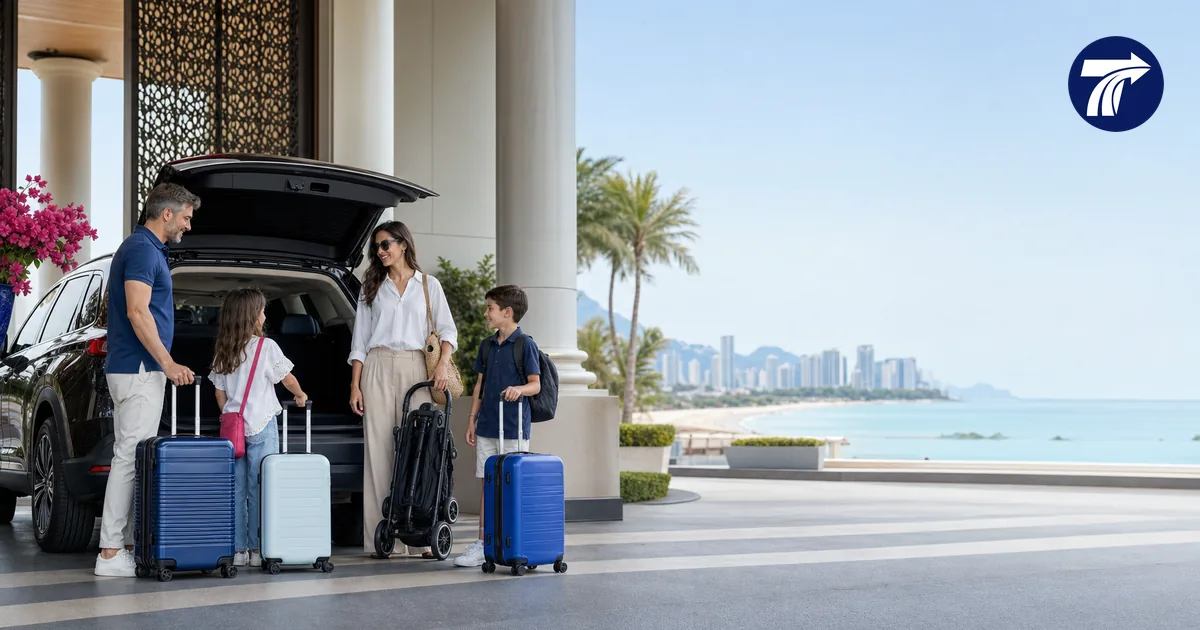
Assign jobs before the vehicle arrives. One adult can supervise children and restraints while another confirms the booking and luggage count. Load large bags first only after the driver approves the arrangement; keep the accessible family bag separate.
Before departure, check that doors are closed, aisles are clear and every passenger is using the appropriate restraint or seat belt. Do not place a backpack, toy or bottle where it interferes with a belt or restraint.
At a comfort stop, agree on a meeting point before anyone walks away. Count children and bags again before returning to the road. At the Bangkok hotel, reverse the process: one adult supervises children away from traffic while the other unloads.
This routine is intentionally simple. It does not depend on a promised vehicle model or a perfect schedule, and it reduces the moments when a child or essential bag is left without a clearly responsible adult.
Frequently asked questions
Does TOP PATTAYA TAXI provide child seats?
A child restraint is request-only. Send each child’s age, approximate height and weight before booking. Travel on the basis of the written confirmation, which must identify availability, suitability and any condition or charge that applies. Do not assume a restraint is free or guaranteed.
Can we bring our own child restraint?
Tell the operator the model, approximate dimensions and attachment requirement, and ask whether it is compatible with the proposed vehicle.
How many stops can a family request?
There is no universal number of included stops. Describe the desired comfort stop before booking and include the agreed location, timing and any applicable condition in the confirmation.
Which vehicle is best for a stroller?
It depends on the folded stroller, suitcases and passengers. Send the complete load instead of relying on a generic label.
How long is the journey with children?
Exact time varies with addresses, traffic, weather and stops. Plan a range and keep a margin.
Plan your family transfer
Review the Pattaya to Bangkok private transfer and contact TOP PATTAYA TAXI with the complete family checklist. Do not confirm until the restraint, vehicle and itinerary are clear.