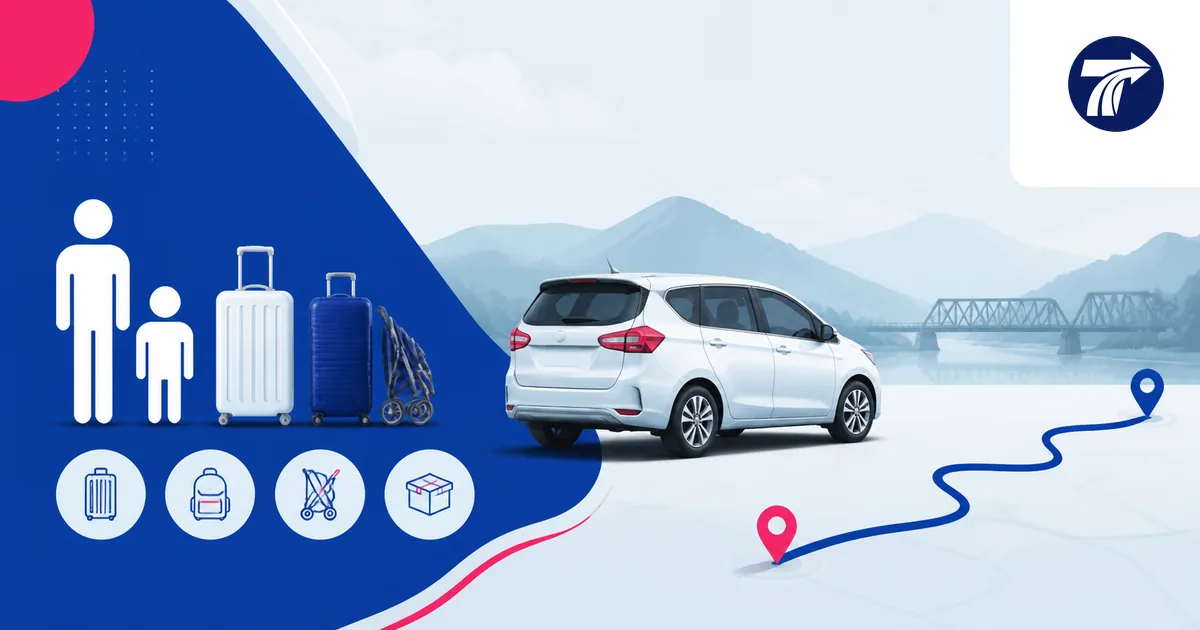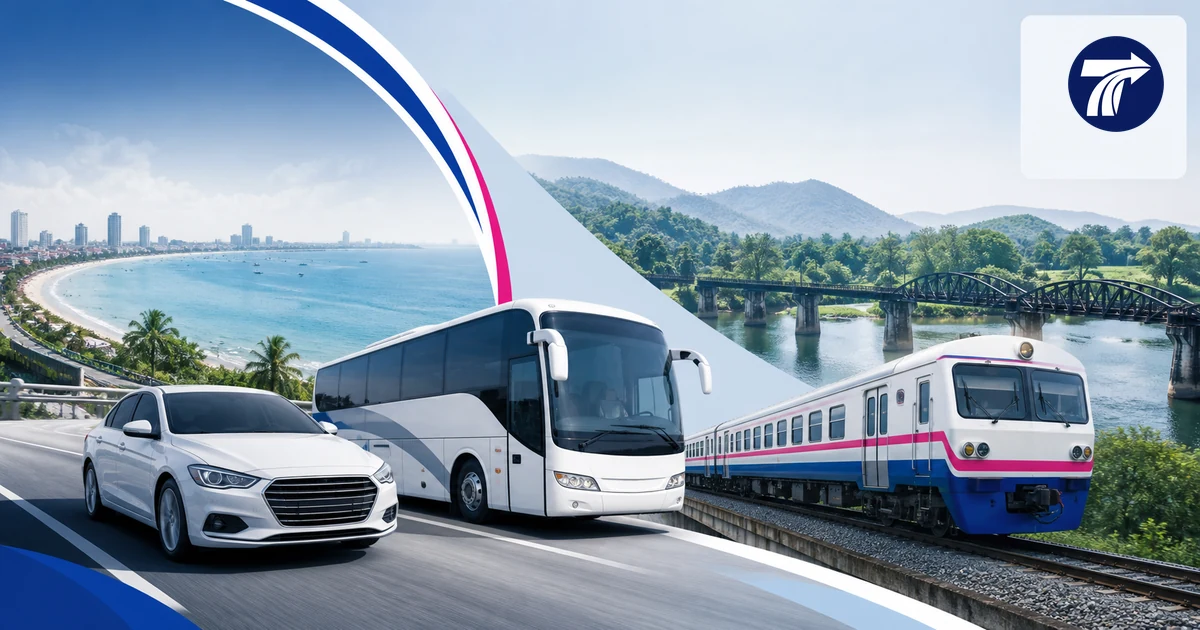
Choosing Pattaya to Kanchanaburi transport is less about comparing three vehicles than comparing three complete journeys. A private taxi can be arranged from one confirmed address to another, while bus- and train-based plans may require local travel, connections and a separate final leg.
There is no evergreen timetable or operator claim on this page. Scheduled services, departure points, fares and luggage rules can change, so verify every public-transport leg with its current operator for the travel date. Use this guide to structure that research and compare the same address-to-address task fairly.
Quick Decision: What Each Option Optimizes For
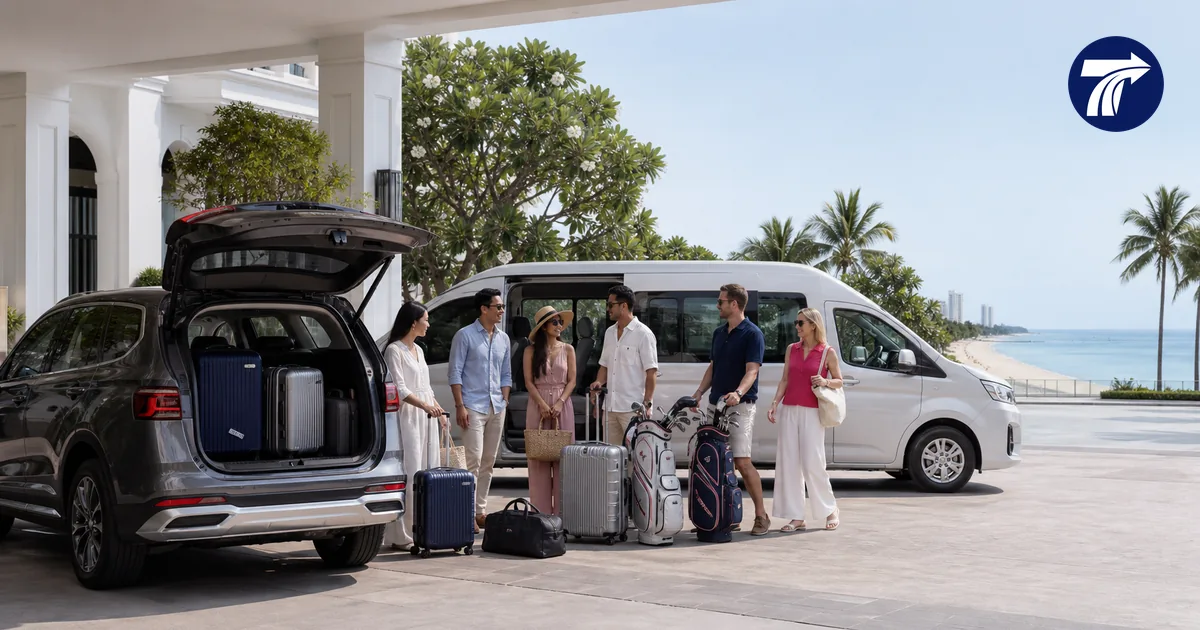
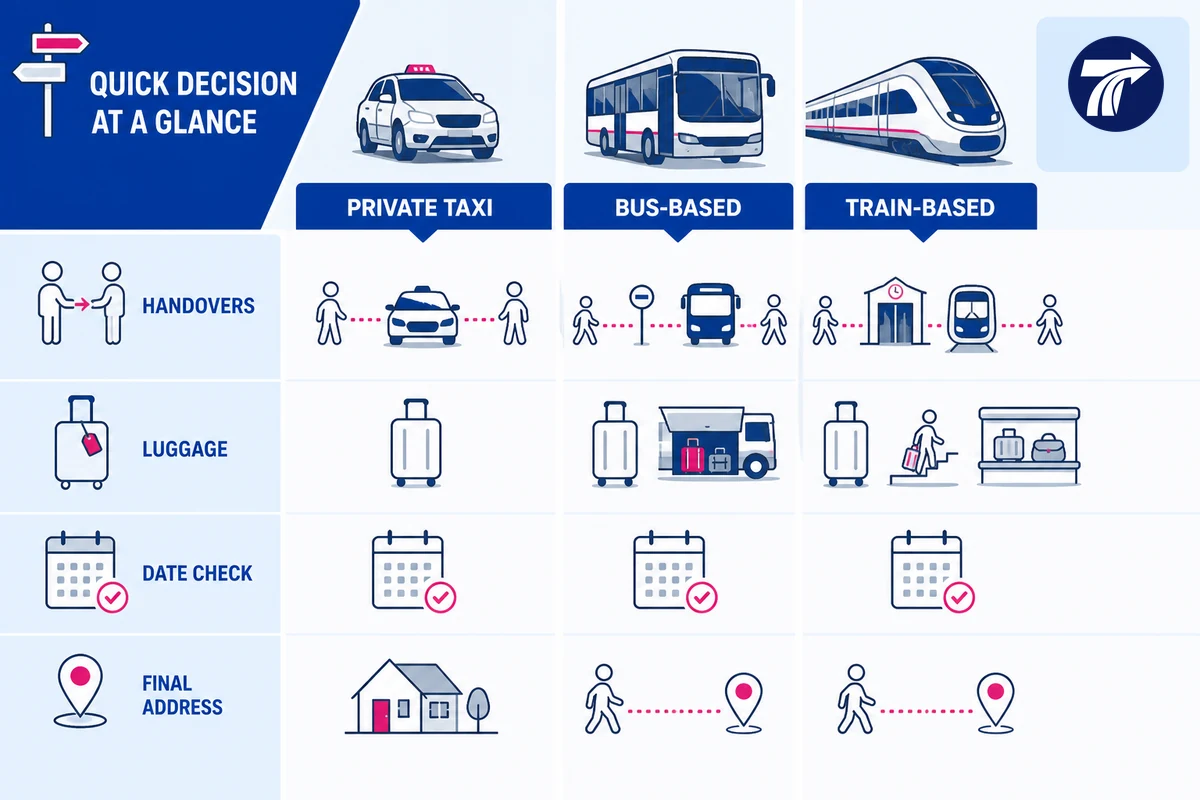
Private transport usually optimizes for continuity: the party and luggage remain with one booked vehicle when the confirmed itinerary is a direct transfer. It can suit travellers who value a defined pickup, exact hotel arrival or fewer physical handovers.
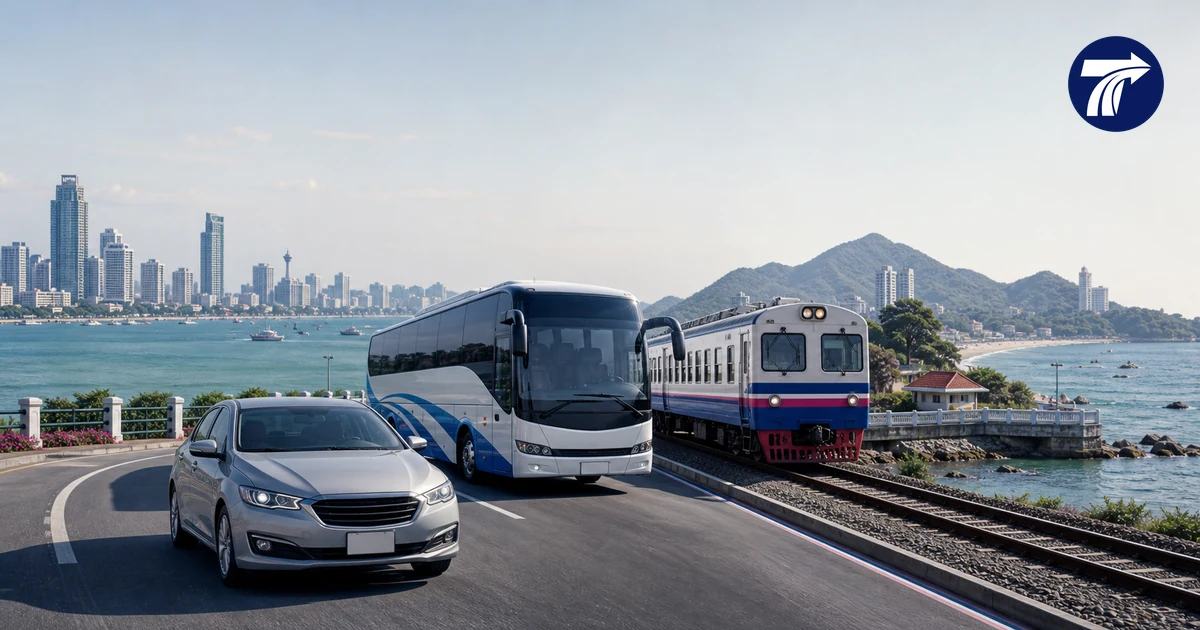
A bus-based plan may suit a traveller willing to research current services and arrange local connections in exchange for using scheduled road transport. A train-based plan can appeal to someone who values the rail experience and accepts that Pattaya is not presented here as the origin of a direct Kanchanaburi train.
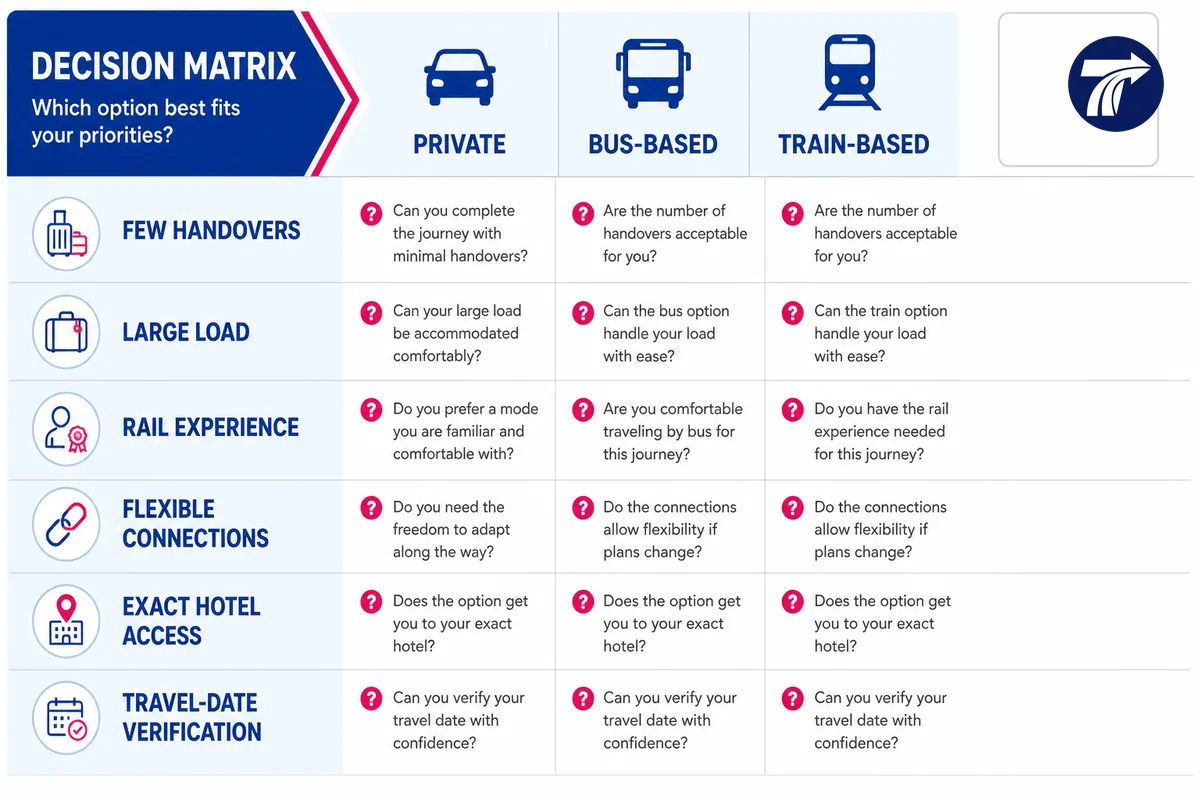
No mode wins for every person. The useful questions are: How many legs must be confirmed? How much luggage must move? Is anyone travelling with reduced mobility or young children? Where is the Kanchanaburi hotel? What happens if one scheduled leg is late?
Start With the Complete Journey
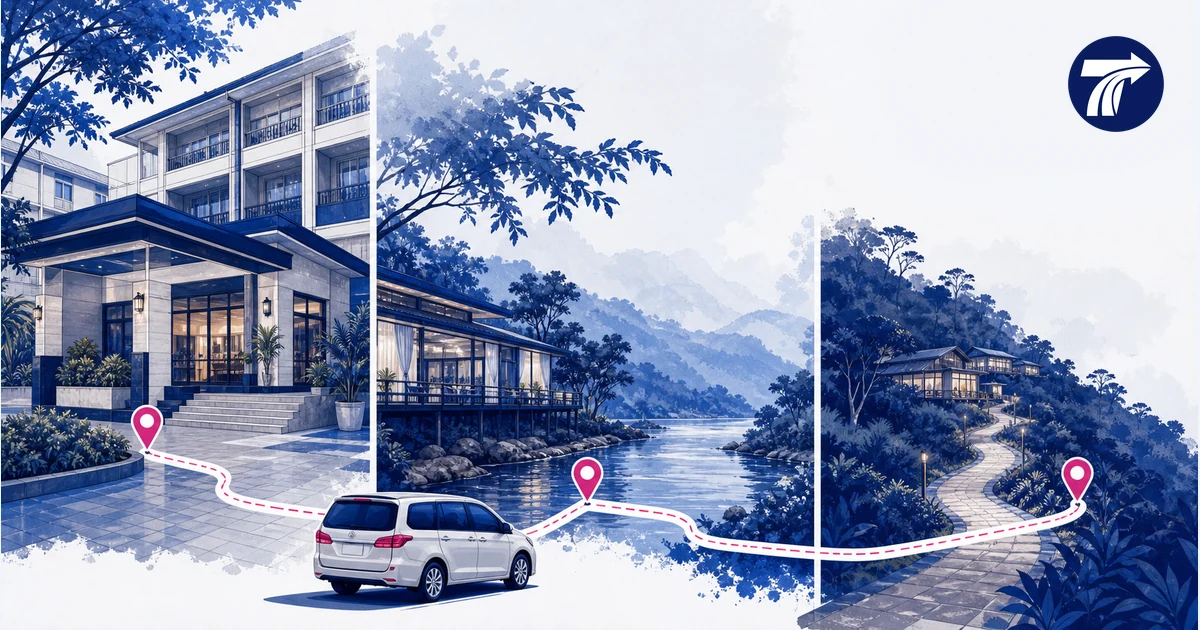
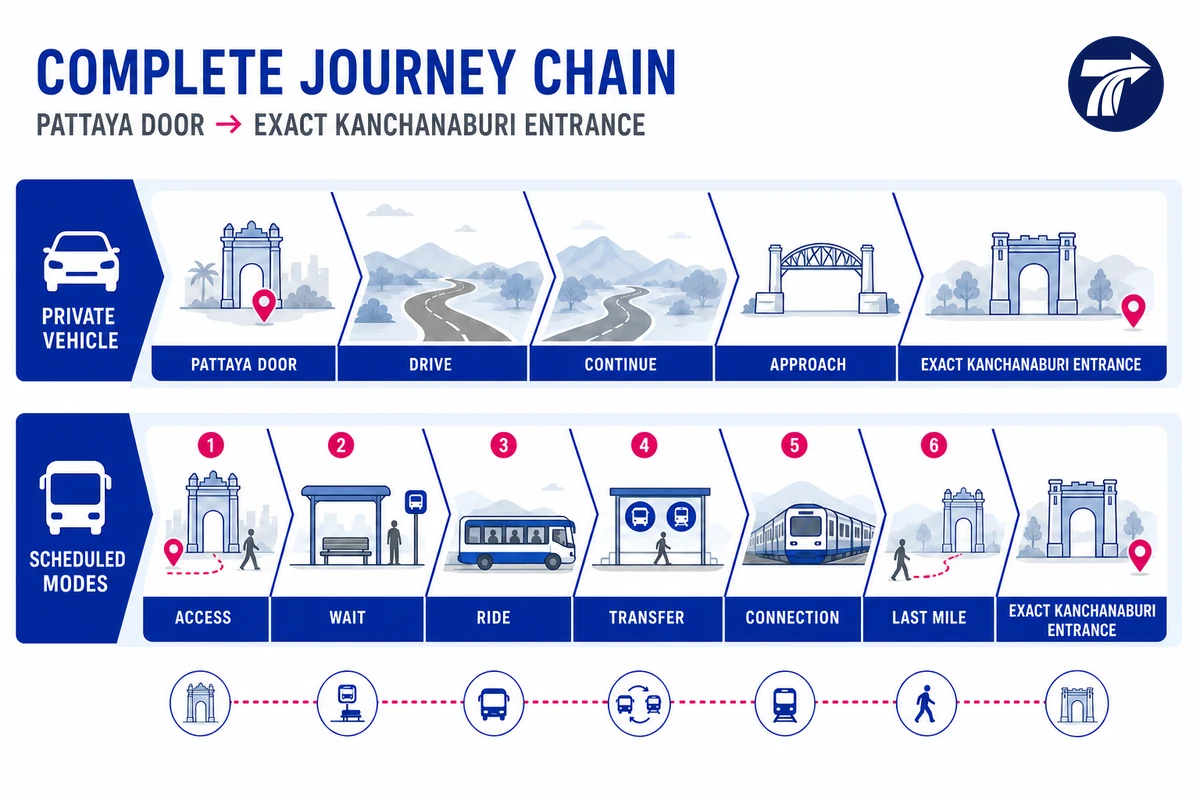
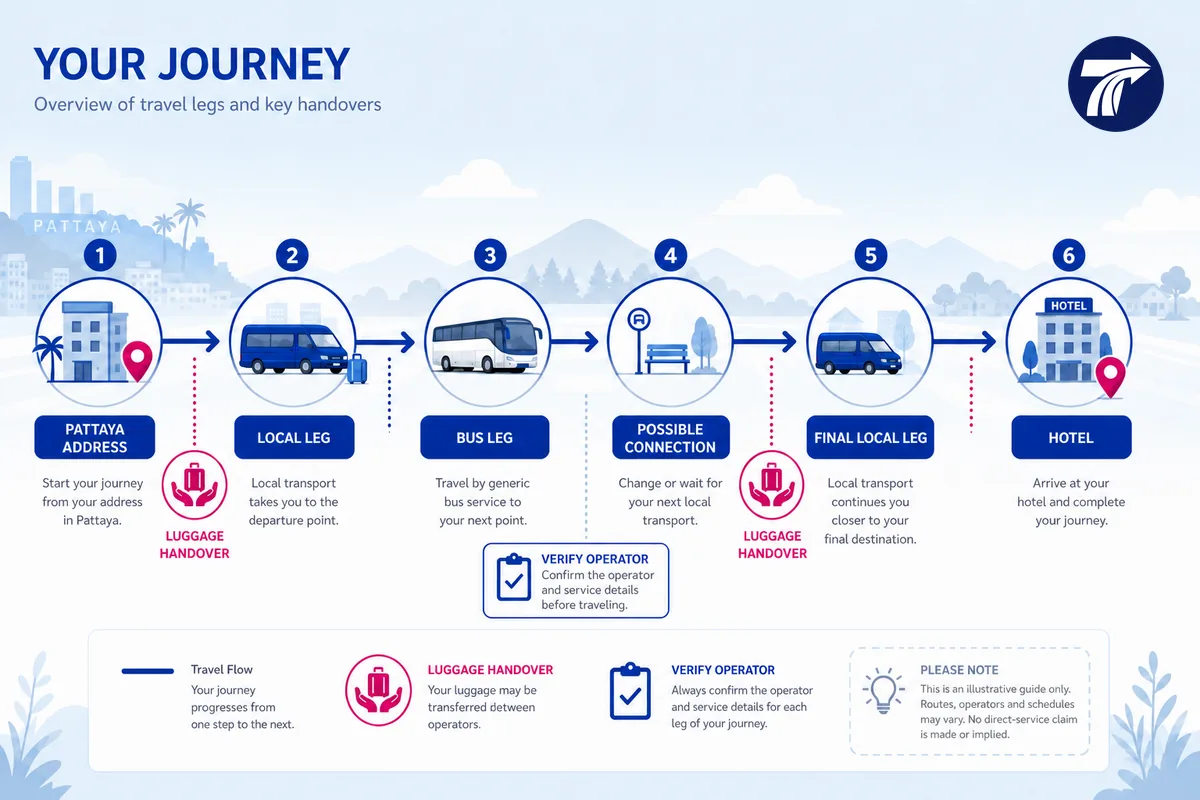
Write the trip as a chain beginning at the actual Pattaya address and ending at the real accommodation entrance. Do not start the comparison at an unnamed terminal or finish it at “Kanchanaburi.” A basic public-transport chain might include local pickup, scheduled leg, transfer between services, onward scheduled leg and final local ride.
For each stage, record the operator source, departure and arrival point, check-in margin, baggage rule, payment or reservation method, and fallback if the connection fails. Mark every time the group must unload, find a platform or terminal, cross a road, buy another ticket or renegotiate transport.
Then make a one-line private-transfer chain: confirmed Pattaya pickup to confirmed Kanchanaburi drop-off, plus only the stops accepted in writing. The comparison is now between full chains rather than a private fare and one isolated public ticket.
Option 1: Private Taxi
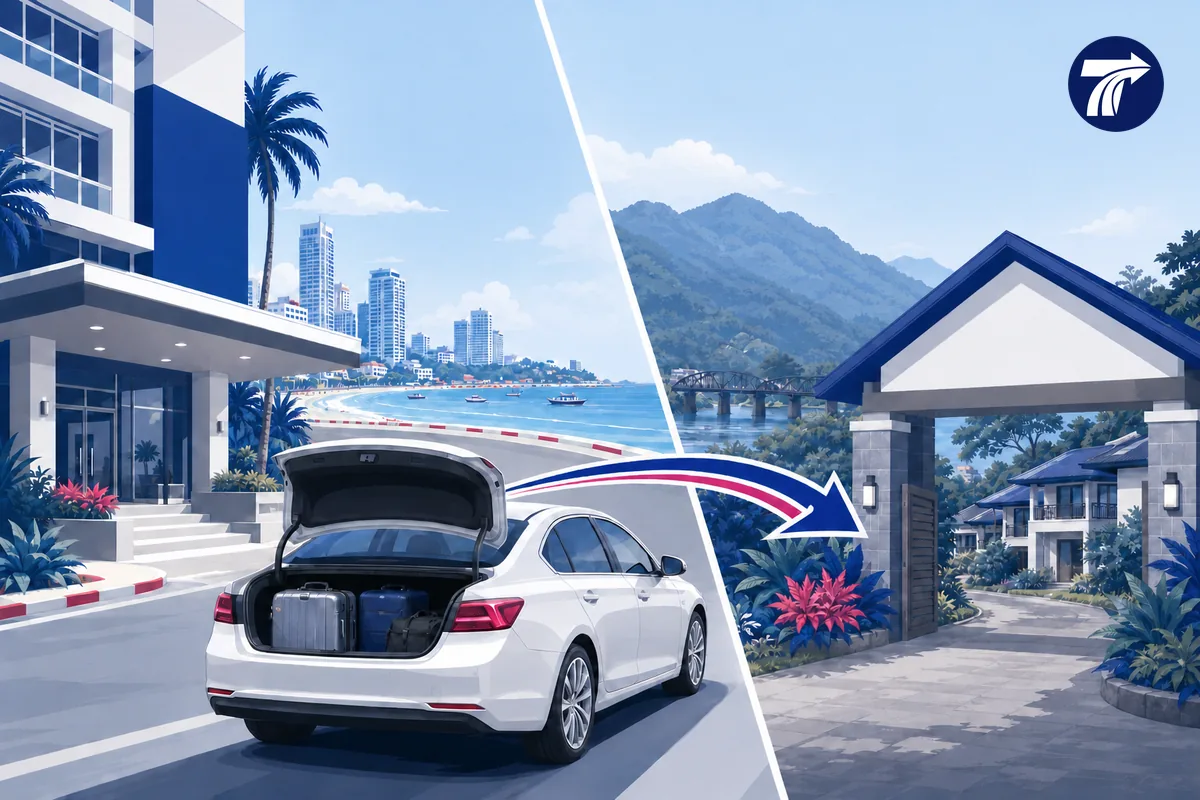
A private transfer can collect the group from a named hotel, condominium, villa or home and deliver it to the confirmed Kanchanaburi endpoint. That reduces transfers and keeps responsibility for the road journey within one accepted booking, provided the itinerary actually confirms a single vehicle and the requested destination.
For published route fares, vehicle figures and exact-address caveats, use the Pattaya to Kanchanaburi private-transfer page. Compare complete journey options here rather than treating one fare table as the whole trip.
Private does not mean unlimited. The quote should state the vehicle, combined passenger-and-luggage fit, endpoints, stops, waiting and fare. A distant Sai Yok property, Erawan-area address, remote riverside resort or boat handover may need a different scope. Traffic and route conditions also prevent an exact journey-duration guarantee.
This mode tends to be easiest to evaluate when a group has many bags, needs an exact hotel entrance, wants one shared departure time or prefers fewer transfers. Its cost should be assessed for the whole confirmed vehicle and trip, not compared with one person's partial public-transport ticket.
Option 2: Bus-Based Routes
A bus-based journey means building a current route from operator-supported legs. This page does not claim that a direct Pattaya–Kanchanaburi bus currently operates. Without current first-party operator evidence, plan on the possibility of one or more changes and research the exact travel date.
Start by identifying which licensed operator, if any, publishes the relevant origin, destination, terminal and departure. Confirm that the place name refers to the correct terminal rather than a sales agent or roadside stop. Ask or check how early passengers should arrive, how baggage is handled, whether large items are accepted and what happens after a missed connection.
Add the local trips to and from the scheduled service. A Pattaya property may be far from the departure point, and a Kanchanaburi hotel can be outside the useful radius of an arrival point. Late arrival can also make the final local leg harder to arrange. Never treat an aggregator snippet as the source of record for the operator, fare or timetable.
Option 3: Train-Based Routes
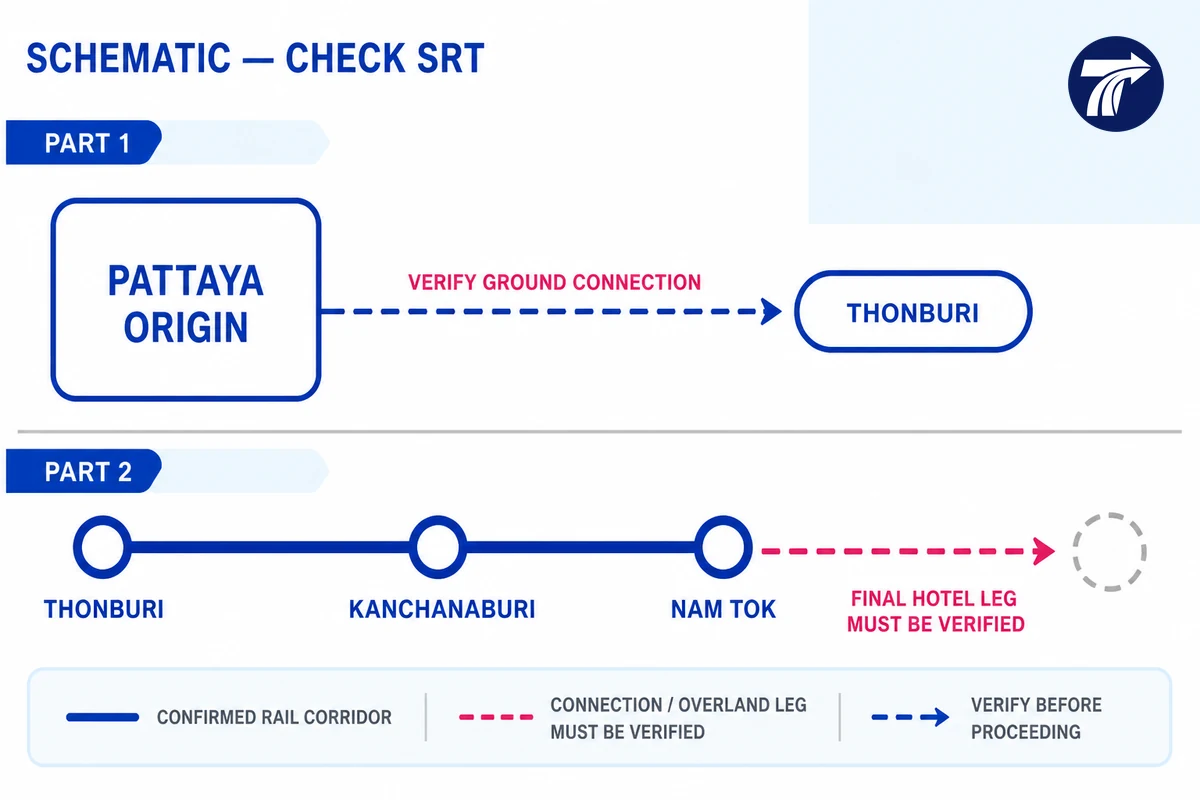
The State Railway of Thailand identifies a western line connecting Thonburi, Kanchanaburi and Nam Tok. That official context supports rail service on that corridor; it does not establish a direct train from Pattaya to Kanchanaburi.
A rail-based plan from Pattaya therefore needs an independently verified route to the appropriate rail departure point, the current SRT service, and transport from the arrival station to the final hotel. If the traveller continues toward Nam Tok or another station, that becomes another travel-date decision rather than a guaranteed connection stated here.
Use the current SRT channel to check the originating station, service number, operating date, departure and arrival, booking method, seat availability and baggage rules. Recheck close to travel for changes or disruption. A map showing railway tracks is not proof that the service, connection or ticket needed by a particular traveller is available.
Rail can be rewarding when the journey itself matters and the party can manage multiple stages. It is less forgiving when large luggage, a tight hotel check-in, limited mobility or a missed first connection would create difficulty.
Compare Door-to-Door Time, Not Vehicle Time
Door-to-door time begins when the party leaves its Pattaya accommodation and ends when it reaches the actual Kanchanaburi entrance. For a scheduled plan, add local pickup, check-in margin, waiting, the ride, transfer time, connection protection, another scheduled leg where required, and the final local transfer.
Also count friction that is easy to omit: walking with bags, finding the correct platform, buying or collecting tickets, moving between terminals, waiting for a local vehicle and recovering from a delay. Do not select a fragile connection merely because the individual travel times look short on separate screens.
For private transport, include agreed pickup preparation, approved stops and realistic road uncertainty. Do not replace those variables with a guaranteed duration. The best comparison is a range with explicit assumptions and a backup, especially when there is a fixed check-in or attraction booking.
Compare Complete Cost Fairly
Build a cost sheet by party, not by advertising headline. For a public-transport plan, include every traveller's tickets, both local transfers, connection transport, baggage charges if officially published for the service, reservation fees and a reasonable contingency for a missed or unavailable leg. Do not insert a current figure unless the operator supports it on the checking date.
For a private option, use the exact written quote for the complete vehicle and confirmed endpoints. The Services & Rates reference is the first-party place to check published private-transfer information, while the dedicated Kanchanaburi page provides the route-specific fare table.
Divide a vehicle quote by the number of travellers only as a personal comparison calculation; it does not turn the service into per-seat transport. Compare refundable or changeable conditions too, because a lower initial figure can be poor value if one missed connection requires a replacement journey.
Luggage, Mobility, Families and Groups
Count luggage handovers, not just bags. Each connection may require the traveller to unload, move and reload everything, sometimes across an unfamiliar station or terminal. Confirm scheduled-service luggage rules with the operator, and do not infer space from a photo of a bus or train.
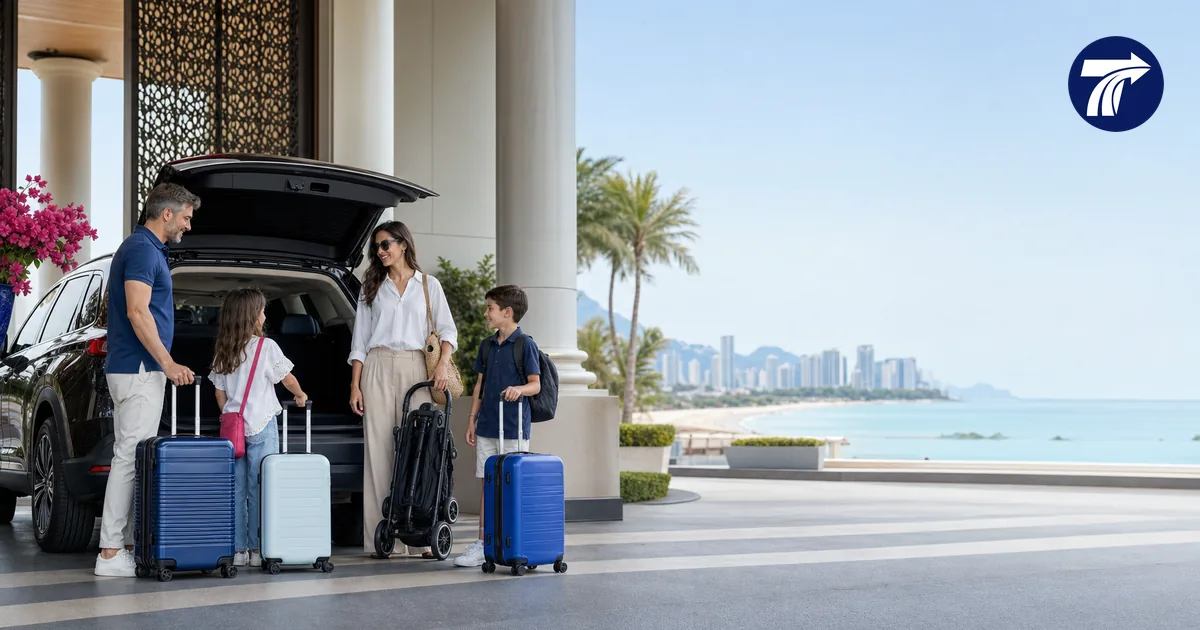
For a private quote, list all people and luggage together. Published passenger maxima are not luggage guarantees, and child-restraint or accessibility requests need written acceptance. A larger group may benefit from staying together, but the practical vehicle choice depends on the full load rather than headcount alone.
Travellers with reduced mobility should research step-free access, boarding gaps, assistance and final-hotel access directly with the relevant operators and property. Families should count snacks, changes, toilets, rest needs and the effect of a late connection. No option should be presented as universally accessible without specific evidence.
Your Kanchanaburi Hotel Can Change the Best Choice
A central town hotel and a remote river stay create different last-mile problems. Search the complete property address, request its preferred arrival point and ask whether a road vehicle reaches reception. Some accommodation may use a pier, boat handover, restricted access road or different reception point.
If using public transport, obtain the hotel's own advice about the practical final leg and late-arrival arrangements. If booking private transport, send the pin before accepting the quote so route coverage can be checked. “Near River Kwai” is marketing context, not a precise transport endpoint.
Travellers planning historical sites can use the respectful River Kwai itinerary framework. Those prioritizing the national park should keep Erawan as a separate planning job and consult the Erawan overnight transfer guide.
Which Option Fits Your Trip?
Choose a private taxi when fewer handovers, a named door-to-door route and one shared booking outweigh the appeal of scheduled transport. Before paying, confirm every address and condition; the private-transfer booking checklist shows what to send.
Choose a bus-based plan when a current operator supports workable legs and you are comfortable arranging terminal access, connections, luggage handling and the hotel transfer. Choose a train-based plan when verified SRT services fit the travel date and the rail experience justifies the extra connections from Pattaya and to the final address.
For a useful comparison method on another route, the Pattaya-to-Bangkok mode guide can help you see how route topology changes by destination. Do not copy its services or assumptions onto Kanchanaburi; research this journey independently.
Frequently Asked Questions
Is there a direct train from Pattaya to Kanchanaburi?
This guide makes no such claim. SRT identifies a Thonburi–Kanchanaburi–Nam Tok line, so a Pattaya-origin rail plan needs separately verified connecting legs and current SRT information.
Is there a current direct bus from Pattaya to Kanchanaburi?
Do not assume one. Use a current first-party operator source to verify the route, terminal, date, departure and booking conditions. If that evidence is unavailable, plan and price a connected journey.
Which option is fastest?
There is no guaranteed answer without travel-date services, both addresses and current conditions. Compare complete door-to-door chains, including access, waiting, connections and final-hotel travel.
Is public transport always cheaper than a private taxi?
Not necessarily for the complete party. Add all tickets, local legs, fees and contingencies, then compare that total with the written vehicle quote. Do not compare one ticket with an entire private booking.
Can I travel with large suitcases by bus or train?
Check the current operator's baggage rules and the physical handovers required. For private transport, declare every bag because passenger capacity alone does not confirm luggage fit.
Which option is best for a remote riverside hotel?
The answer depends on the exact pin and final access. Ask the hotel how guests reach reception, then verify the final leg or request private-route coverage in writing.
Are schedules and public-transport fares shown here?
No. They are volatile and must be checked with current first-party operators for the intended travel date.
Choose the Door-to-Door Option
Map every leg from your Pattaya door to the exact Kanchanaburi entrance, then compare total time, full-party cost, luggage handling and connection risk. If a confirmed private vehicle fits that journey, use the official contact page to request the door-to-door option with both pins and the complete passenger-and-bag load.